

Barrier-First Skincare: Why Fixing Dehydration Comes Before Brightening
A brightening serum gets added to the routine, skin turns pink, flaky or reactive within days, and the assumption is usually that the active ingredient doesn't suit the skin. Often what actually happened is that the active was introduced onto a barrier that wasn't equipped to tolerate it yet. Dehydrated, compromised skin reacts to brightening ingredients very differently from skin with an intact barrier, and that difference is the part most routines skip.
The short answer
A weakened or dehydrated skin barrier should generally be addressed before, or at the same time as, introducing active brightening ingredients, not afterward. Brightening actives work by influencing pigment production or skin turnover, and both processes depend on a functioning barrier to proceed without irritation. Skipping straight to brightening on compromised skin tends to produce more sensitivity and slower, less consistent results than doing barrier support first.
What the skin barrier actually does
It's not just about feeling hydrated
The outermost layer of skin, the stratum corneum, functions as a barrier that keeps moisture in and irritants, allergens and pollutants out. It's often described using a brick-and-mortar structure: skin cells act as the bricks, and lipids (fats naturally present in skin) act as the mortar holding everything together.
When that structure is intact, moisture stays where it should and irritants have a harder time getting through. When it's compromised, whether from over-exfoliation, harsh products, dehydration or environmental stress, both directions of that seal weaken at once.
Dehydration and barrier damage feed each other
Dehydration, a lack of water in the skin, is different from dryness, which refers to a lack of oil. Skin can be oily and dehydrated at the same time. But sustained dehydration does damage the barrier over time, since the lipid structure that holds moisture in also depends on adequate water content to function properly.
Once the barrier is compromised, it becomes harder for skin to retain moisture, which deepens the dehydration, which further weakens the barrier. This cycle is one of the more common reasons a routine that used to work suddenly stops agreeing with skin, particularly after starting a new active ingredient or increasing its frequency.
Why brightening actives need an intact barrier to work well
Actives penetrate differently through compromised skin
A weakened barrier is, by definition, more permeable than it should be. Ingredients that would normally be absorbed at a controlled, tolerable rate can penetrate faster and more unevenly through a compromised barrier, which increases the likelihood of irritation, redness and a stinging or burning sensation on application.
That irritation isn't just uncomfortable. Inflammation is itself a trigger for pigmentation, particularly post-inflammatory pigmentation, which means introducing a brightening active onto irritated, barrier-compromised skin can, in some cases, work against the very goal of even tone.
A compromised barrier disrupts skin's own repair and turnover process
Brightening ingredients like niacinamide and tranexamic acid rely on relatively normal skin cell turnover to move pigmented cells toward the surface and off. A stressed, inflamed or dehydrated barrier disrupts that turnover process, working against the ingredient's mechanism rather than supporting it.
This is part of why brightening routines sometimes stall on skin that's simultaneously dealing with dehydration or barrier damage from another source, such as over-exfoliation or an unrelated reactive period, even when the active ingredient itself is well-suited to the concern.
How to tell if your barrier needs attention first
- Skin feels tight or uncomfortable shortly after cleansing, rather than settling into a comfortable state within a few minutes.
- New products that previously felt fine start stinging or causing redness.
- Skin looks dull or slightly rough in texture, independent of any specific dark spots or tone concerns.
- Breakouts, flaking or sensitivity increase after starting or intensifying an active ingredient routine.
- Skin feels persistently dehydrated even with regular moisturiser use, suggesting the moisturiser is sitting on top rather than being retained.
If several of these are present, it's generally worth focusing on barrier support and hydration for a period before adding or continuing a brightening active, rather than pushing through irritation in pursuit of faster tone results.
What barrier-first actually looks like in practice
- Simplify actives temporarily if skin shows signs of compromise, rather than adding more ingredients to try to fix the reaction.
- Prioritise humectants and barrier-supporting lipids, such as hyaluronic acid, glycerin and squalane, to rebuild moisture retention before reintroducing actives.
- Reintroduce brightening ingredients gradually, starting with lower frequency, once skin feels stable and comfortable rather than tight or reactive.
- Keep daily sun protection consistent throughout, since UV exposure works against both barrier repair and pigmentation control at the same time.
- Watch for how skin responds, not just how fast it brightens. A barrier that stays compromised will generally produce less consistent, slower results even from an effective brightening ingredient.
Common mistakes
- Adding a brightening serum during a reactive or irritated period. This is one of the more common ways a well-formulated product gets blamed for a barrier issue it didn't cause.
- Assuming stinging means an active is "working." Discomfort is more often a sign of barrier compromise than a sign of efficacy.
- Layering multiple actives at once on already-dehydrated skin. This compounds the irritation risk rather than accelerating results.
- Treating hydration as optional once actives are introduced. Ongoing hydration support remains necessary for actives to work as intended, not just as a first step before starting them.
- Over-exfoliating to "help" brightening along. This is a direct route to barrier damage and can trigger the inflammation-driven pigmentation it's meant to prevent.
How One & Done approaches barrier and brightening together
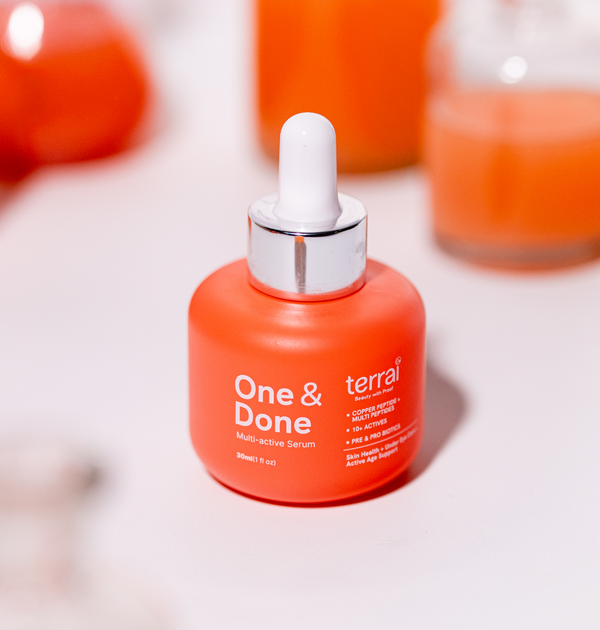
The One & Done Serum is formulated as a multi-corrective serum that combines barrier and hydration support with brightening and texture-focused ingredients in a single formula, rather than treating them as separate steps to be sequenced across different products. That combined approach is directly relevant to the barrier-first principle described above: hydration and barrier support delivered alongside brightening actives, rather than only before them, reduces the chance of a routine gap where skin is exposed to an active without adequate support.
Final word
Brightening ingredients work with skin's natural turnover process, not around it, and that process depends on a barrier that's intact enough to function properly. Addressing dehydration and barrier health first, or at minimum alongside brightening actives rather than after introducing them, tends to produce steadier, more comfortable progress than chasing tone results on compromised skin.
If a formula built to address hydration and brightening together fits your routine, take a look at One & Done and pay attention to how skin feels, not just how it looks, as you introduce it.
FAQs
Should I fix my skin barrier before using a brightening serum?
Generally yes, or at minimum address both at the same time. Brightening ingredients depend on relatively normal skin turnover, which a compromised or dehydrated barrier disrupts. Introducing an active onto already-irritated skin tends to cause more sensitivity and slower results than supporting the barrier first.
How do I know if my skin barrier is damaged?
Common signs include skin that feels tight after cleansing, stinging from products that previously felt fine, dullness or rough texture, and increased sensitivity or breakouts after starting a new active. If several of these are present, a period of barrier-focused, simplified skincare is generally worth prioritising.
Can dehydrated skin still use a brightening serum?
It's usually better to address dehydration first or use a formula that combines hydration and brightening support together, since a dehydrated barrier increases the risk of irritation from active ingredients. Dehydration and barrier compromise are closely linked, and skipping hydration support can undermine the brightening results.
Does stinging or tingling mean a brightening product is working?
Not necessarily, and it's often the opposite. Stinging is more commonly a sign that an ingredient is penetrating unevenly through a compromised barrier rather than a sign of efficacy. Persistent stinging is a reason to pause and focus on barrier support rather than push through.
How long does it take to repair a damaged skin barrier?
This varies by individual and severity, but skin barrier repair generally aligns with skin's natural renewal cycle, which typically takes several weeks. Consistency with gentle, hydrating, barrier-supporting products during this period matters more than the specific number of days it takes.

More from the Journal
 Sunscreen goes on the face every morning, and lips get skipped entirely, even though they're just as exposed to UV throughout the day. That...
 A brightening serum goes on for two weeks, nothing visible happens, and it gets shelved as "not working" right around the point it was...
 Lips crack, darken and show fine lines well before the rest of the face does, and it isn't because they're neglected more than facial...