

Winter Dullness and Dark Spots: Why Skin Looks Tired and How to Fix It
Somewhere between the first cool mornings and the end of the year, skin starts to look flat. The glow goes, makeup sits on top instead of melting in, and dark spots that barely showed in summer suddenly look sharper. It’s easy to blame tiredness or stress, but winter dullness usually has more practical causes, and most of them are fixable with a few adjustments to your routine.
The short answer
Skin looks dull in winter mainly because it’s dehydrated. Dry air, wind, indoor heating and hot showers pull moisture from the skin, which weakens the barrier and leaves the surface rougher, so it reflects less light. Dark spots look more obvious against that flat, uneven surface, and skipping sunscreen in cooler months lets them keep darkening.
The fix is to rehydrate and support the barrier, smooth the surface gently, keep wearing sunscreen, and use a serum that works on both glow and dark spots consistently through the season.
Why skin looks dull in winter
Dehydration
Cold air holds less moisture, and indoor heating dries the air even further. Skin loses water faster, and dehydrated skin looks flatter, feels tighter and shows fine lines more easily. Hydrated skin has a smoother surface that reflects light evenly, which is what we see as glow.
A weaker skin barrier
The skin barrier keeps moisture in and irritants out. Winter conditions, long hot showers and harsh cleansers can weaken it, which makes skin rougher, more reactive and less radiant. Our guide on barrier-first skincare explains why fixing this comes before anything else.
Build-up on the surface
When skin is dry, dead cells on the surface don’t shed as smoothly. That uneven, flaky layer scatters light instead of reflecting it, adding to the tired, grey look.
Routine changes
Many people switch to heavier creams, skip serums, shorten their routines when it’s cold, or stop wearing sunscreen. Each change on its own seems minor, but together they add up to duller skin by mid-winter.
Why dark spots look more obvious in winter
Dull skin makes spots stand out
When the overall surface is flat and uneven, dark spots and post-acne marks have nothing to blend into. Rehydrated, smoother skin often makes the same spots look softer.
Summer pigmentation becomes visible
Tanning and sun-related pigmentation from summer can leave behind uneven patches. As the tan fades, the spots that formed during those months show more clearly against the rest of your skin.
Skipping sunscreen in winter
UVA, the rays most linked to pigmentation, stays present through the year and passes through clouds and window glass. Stopping sunscreen in winter lets existing spots keep darkening and new ones form. Our guide on sunscreen for pigmentation and dark spots explains why daily protection matters.
How to fix winter dullness and dark spots
1. Cleanse gently
Use a mild cleanser that doesn’t leave skin tight, and keep water lukewarm rather than hot. Squeaky-clean usually means stripped.
2. Rehydrate with humectants
Ingredients like hyaluronic acid, glycerin and betaine draw water into the skin. Apply them to slightly damp skin and follow with a moisturising layer so the hydration stays in.
3. Support the barrier
Squalane, plant oils and soothing ingredients like aloe vera help keep moisture in and calm dry, reactive skin.
4. Target dark spots with the right actives
Ingredients such as tranexamic acid, niacinamide and vitamin C work on pigmentation in complementary ways. They need weeks of consistent use, so winter is a good time to stay on them rather than pause. Our guide on how long brightening serum results take sets realistic expectations.
5. Smooth the surface gently
Gentle exfoliation can help shed dull build-up, but winter skin is easily irritated. Choose mild options, use them sparingly, and stop if skin stings or flakes more.
6. Keep wearing sunscreen
Daily sunscreen protects the progress your treatment products are making. A lightweight, hydrating formula is easier to wear consistently in dry weather.
7. Refresh during the day
A hydrating face mist can bring back moisture and a fresh look by afternoon, especially in heated rooms.
A simple winter routine for glow and even tone
- Morning: gentle cleanser, brightening and hydrating serum, light moisturiser if needed, sunscreen
- Midday: a hydrating face mist to refresh, with SPF if you’re near windows or heading out
- Evening: gentle cleanser, the same serum, a richer moisturiser if your skin feels dry
Keeping one consistent serum morning and night is often more effective than rotating several products.
Common mistakes
- Over-exfoliating to fix dullness. This weakens the barrier and makes skin look duller and more reactive.
- Long, hot showers. They strip natural oils and leave skin tight.
- Switching to heavy creams only. Rich creams seal moisture in, but skin needs water first from humectants.
- Pausing brightening serums in winter. Progress on dark spots needs consistent use.
- Skipping sunscreen because it’s cool. UVA keeps darkening spots year-round.
- Treating all marks the same. Post-acne marks, sun spots and general dullness respond differently. Our guide on post-acne marks, dullness and uneven tone helps you work out which is which.
How One & Done fits a winter routine
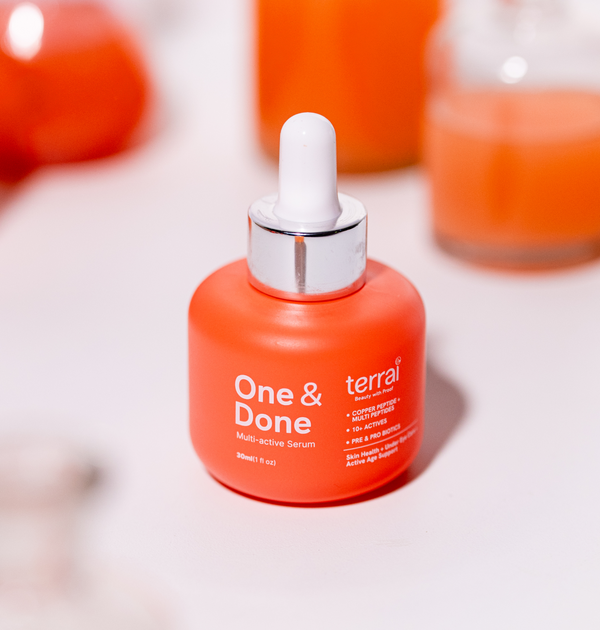
The One & Done Serum is a multi-active, multi-corrective face serum designed to address dullness, dehydration and dark spots in a single step, which suits winter when many people want a shorter routine.
For hydration and the barrier: sodium hyaluronate, natural betaine, aloe vera and olive squalane help rehydrate dry winter skin and support the barrier, which brings back a smoother, more radiant surface.
For dark spots and uneven tone: tranexamic acid, niacinamide and ethyl ascorbic acid, a stable form of vitamin C, work on dark spots, post-acne marks and uneven tone over time.
For texture and firmness: a peptide complex, including acetyl hexapeptide-8, copper tripeptide-1 and palmitoyl pentapeptide-4, supports smoother, firmer-looking skin.
For tired-looking skin: caffeine and green tea extract help with puffiness and calm stressed skin.
In-vivo clinical, hypoallergenic and skin irritation test reports are published on the product page. Use 2 to 3 drops on the face and neck after cleansing, morning and evening. Our guide on multi-corrective serums explained covers how one serum can handle several concerns, and peptides and tranexamic acid explains how its actives work together.
Follow it every morning with sunscreen. The Aqua Radiance Sunscreen is a watery SPF 50+ PA++++ formula with hyaluronic acid and olive squalane, comfortable for dry winter skin. For a midday refresh, the Hydra Glow Mist adds hydration and tops up protection with SPF 30+ PA+++. Our guide on sunscreen mist vs cream explains how the mist fits in.
All three are formulated and made in house by Terrai.
Quick winter glow checklist
- Cleanse gently with lukewarm water
- Hydrate with humectants, then seal with a moisturiser
- Keep using a brightening serum consistently
- Exfoliate gently and sparingly
- Wear sunscreen every morning
- Refresh with a hydrating mist during the day
- Give results several weeks
Final word
Winter dullness is mostly dehydration and a stressed barrier, and dark spots look worse against that tired surface. Rehydrate, protect your barrier, keep treating dark spots consistently and don’t drop sunscreen when the weather cools. With a steady routine, skin can look brighter and more even right through the season.
If you want one serum that works on dullness, hydration and dark spots together, take a look at the One & Done Serum.
FAQs
Why does my skin look dull in winter?
Winter dullness is mostly caused by dehydration. Cold, dry air, indoor heating and hot showers pull moisture from the skin and weaken the barrier, leaving the surface rougher and flatter so it reflects less light. Rehydrating and supporting the barrier usually brings back glow.
Why do dark spots look worse in winter?
Dark spots stand out more against dull, uneven skin. Pigmentation from summer sun exposure can also become more visible as a tan fades. Skipping sunscreen in winter lets UVA keep darkening existing spots and forming new ones.
Should I exfoliate more in winter to fix dullness?
Not more, but gently. Winter skin is often dry and easily irritated, so over-exfoliating can weaken the barrier and make dullness worse. Use mild exfoliation sparingly, focus on hydration, and stop if your skin starts stinging or flaking more.
Do I need sunscreen in winter if I’m treating dark spots?
Yes. UVA stays present throughout the year and passes through clouds and window glass. Without daily sunscreen, new pigmentation keeps forming while your serum works to fade existing spots, which slows or reverses progress.
How long does it take to fix winter dullness and dark spots?
Hydration improvements can show within days, making skin look fresher and smoother. Dark spots take longer, usually several weeks of consistent use of brightening ingredients alongside daily sunscreen, as skin gradually renews itself.

More from the Journal
 The first cold mornings arrive and so does the familiar sting: tight lips, flaky edges, a crack in the corner that opens every time...
 Copper peptides have moved from niche ingredient lists into mainstream serums, and with the attention has come a mix of genuine interest and confusion....
 Tranexamic acid has gone from a little-known ingredient to one of the most searched names in dark spot care. Alongside the interest comes a...