

Is Tranexamic Acid Safe for Daily Use? (Who Should Be Careful)
Tranexamic acid has gone from a little-known ingredient to one of the most searched names in dark spot care. Alongside the interest comes a reasonable question: is it safe to put on your face every day, morning and night, for months? Some of the worry comes from the fact that tranexamic acid is also a prescription medicine taken by mouth. Topical use in skincare is a different situation, and understanding that difference is the first step to using it confidently.
The short answer
For most people, topical tranexamic acid in a skincare serum is generally considered well tolerated for daily use. It’s commonly used twice a day as part of routines targeting dark spots, post-acne marks and uneven tone, and it’s often described as gentler than many other brightening actives.
That said, “generally well tolerated” doesn’t mean suitable for everyone. People with very sensitive or compromised skin, those who are pregnant or breastfeeding, people using prescription skincare, and anyone with specific medical concerns should check with a doctor or dermatologist before starting.
What tranexamic acid is, and how it works on skin
Tranexamic acid is a synthetic derivative of the amino acid lysine. In skincare, it’s used to help reduce the look of hyperpigmentation.
It works by interfering with some of the signals that tell pigment-producing cells (melanocytes) to make more melanin, particularly signals triggered by UV exposure and inflammation. Rather than bleaching existing pigment, it helps slow the production of new excess pigment, so dark spots gradually fade as skin renews itself.
This is also why results take time. Visible change in tone typically needs several weeks of consistent use. Our guide on how long brightening serum results take explains the timeline.
Topical vs oral tranexamic acid: why the difference matters
Much of the concern around tranexamic acid comes from its use as an oral medication, where it’s prescribed for specific medical reasons and affects how blood clots. Oral use comes with medical screening and supervision for that reason.
Topical tranexamic acid in a face serum is applied to the skin in cosmetic concentrations, and the exposure is very different from swallowing a tablet. The safety considerations for oral tranexamic acid don’t automatically apply to a skincare serum.
Still, if you have a history of blood clotting disorders, take medication that affects clotting, or have any related medical concern, it’s sensible to check with your doctor before using any tranexamic acid product, topical included.
Possible side effects
Topical tranexamic acid is often well tolerated, but as with any active ingredient, some people may notice:
- Mild redness or warmth after application
- Dryness or slight flaking
- Stinging, especially on broken or irritated skin
- Rarely, an allergic reaction such as itching, swelling or a rash
Reactions are more likely when skin is already compromised, or when several strong actives are layered together. If irritation persists or you notice signs of an allergic reaction, stop using the product and seek advice.
Who should be careful
Very sensitive or reactive skin
If your skin often reacts to new products, introduce tranexamic acid slowly and patch test first. Pay attention to the whole formula, not just the tranexamic acid, since other ingredients such as acids or fragrance can be the real cause of irritation.
Skin with a damaged barrier
If your skin is currently tight, stinging, flaking or reactive, it may not tolerate actives well. Our guide on barrier-first skincare explains why fixing dehydration first makes active ingredients easier to use.
Pregnancy and breastfeeding
Research on topical tranexamic acid during pregnancy and breastfeeding is limited. If you’re pregnant, trying to conceive or breastfeeding, check with your doctor before using it.
People using prescription skincare
If you’re using prescription treatments such as retinoids or other pigmentation creams, ask your dermatologist before adding tranexamic acid, so your routine isn’t overloaded with actives.
People with clotting-related medical concerns
As mentioned above, anyone with a history of clotting disorders or related medication should check with a doctor first, even for topical use.
People with diagnosed skin conditions
If you have melasma, rosacea, eczema or another diagnosed condition, a dermatologist can advise on whether and how tranexamic acid fits into your treatment.
How to use tranexamic acid safely every day
- Patch test first. Apply a small amount to the side of your neck or behind your ear for a few days before using it on your face.
- Start on clean, dry skin. Apply a few drops after cleansing, before moisturiser.
- Introduce one new active at a time. That way, you’ll know what’s causing any reaction.
- Don’t overload your routine. Tranexamic acid pairs well with gentle ingredients like niacinamide, hyaluronic acid and peptides. Our guide on peptides and tranexamic acid covers how they work together.
- Wear sunscreen every morning. UV exposure drives new pigmentation, which works directly against tranexamic acid. Our guide on sunscreen for pigmentation and dark spots explains why.
- Give it time. Use it consistently for several weeks before judging results.
Common mistakes
- Assuming oral and topical safety are the same. They’re different situations, but check with a doctor if you have clotting-related concerns.
- Skipping the patch test. Especially important if your skin is sensitive.
- Layering too many actives at once. More actives usually means more irritation, not faster results.
- Using it on irritated or broken skin. Let skin calm down first.
- Skipping sunscreen. Without daily UV protection, new pigmentation keeps forming.
- Expecting overnight results. Tranexamic acid works gradually. If marks are your concern, our guide on post-acne marks, dullness and uneven tone helps you understand which concern you’re treating.
How One & Done uses tranexamic acid
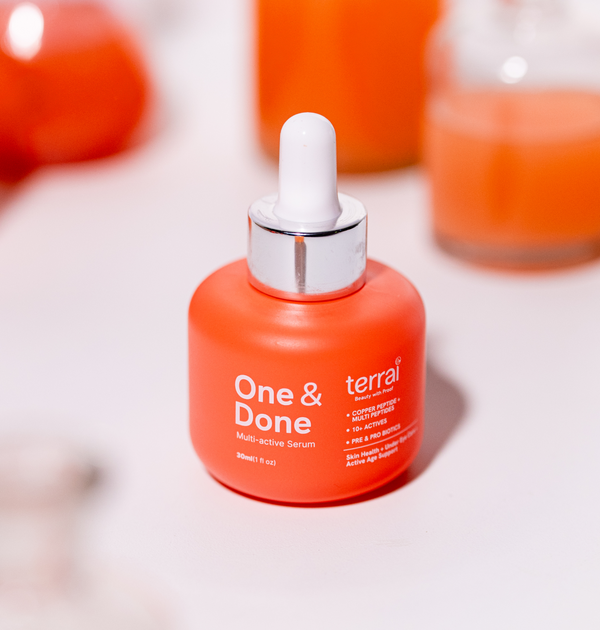
The One & Done Serum is a multi-active, multi-corrective face serum that includes tranexamic acid as part of a wider formula, rather than as a single high-strength active. It’s designed for daily use, morning and evening.
For dark spots and uneven tone: tranexamic acid works alongside niacinamide and ethyl ascorbic acid, a stable form of vitamin C, to target dark spots, post-acne marks and uneven tone.
For barrier and hydration: sodium hyaluronate, olive squalane, aloe vera and natural betaine help keep skin hydrated and comfortable, which supports tolerance of the active ingredients.
For firmness and stressed skin: a peptide complex, including acetyl hexapeptide-8, copper tripeptide-1 and palmitoyl pentapeptide-4, supports smoother, firmer-looking skin, while caffeine and green tea extract help with puffiness and calming.
Safety testing: in-vivo hypoallergenic and skin irritation test reports, along with an in-vivo clinical test report, are published on the product page.
The formula also contains lactic acid, a mild exfoliating acid, so if your skin is very sensitive, patch testing first is especially worthwhile. Our guide on multi-corrective serums explained explains how one serum can address several concerns.
How to use: apply 2 to 3 drops to the face and neck after cleansing, morning and evening, and let it absorb before moisturiser. Always follow with sunscreen in the morning. A lightweight option like the Aqua Radiance Sunscreen, with SPF 50+ PA++++, sits comfortably over serum.
Both are formulated and made in house by Terrai.
Quick safety checklist
- Patch test before full-face use
- Apply to clean, calm skin
- Introduce one new active at a time
- Pair with gentle, hydrating ingredients
- Wear sunscreen every morning
- Check with a doctor if pregnant, breastfeeding, on prescription skincare or with clotting-related concerns
- Stop and seek advice if irritation persists
Final word
Topical tranexamic acid is generally considered well tolerated for daily use, and for many people it’s one of the gentler ways to target dark spots and uneven tone. The safest approach is simple: patch test, keep your routine uncomplicated, protect your skin from the sun every day, and check with a doctor if any of the situations above apply to you.
If you want a daily serum that pairs tranexamic acid with hydrating and barrier-supporting ingredients, take a look at the One & Done Serum.
FAQs
Is tranexamic acid safe to use every day?
For most people, topical tranexamic acid is generally considered well tolerated for daily use, often morning and evening. Patch test first, especially if your skin is sensitive, and check with a doctor if you’re pregnant, breastfeeding, using prescription skincare or have clotting-related medical concerns.
What are the side effects of tranexamic acid on skin?
Some people may notice mild redness, dryness, flaking or stinging, especially on sensitive or irritated skin. Allergic reactions are rare. If irritation persists, or you notice itching, swelling or a rash, stop using the product and seek advice.
Is topical tranexamic acid the same as the tablet?
No. Oral tranexamic acid is a prescription medicine taken for specific medical reasons. Topical tranexamic acid is applied to the skin in skincare products, which is a very different type of exposure. If you have clotting-related concerns, check with your doctor before using either.
Can I use tranexamic acid with niacinamide and vitamin C?
Yes. Tranexamic acid is commonly paired with niacinamide and vitamin C, as they target pigmentation in complementary ways. Introduce new actives one at a time, and avoid layering too many strong products together if your skin is sensitive.
How long does tranexamic acid take to work?
Visible improvement in dark spots and uneven tone usually takes several weeks of consistent use, as existing pigment fades while skin renews itself. Wearing sunscreen every day is essential, since UV exposure triggers new pigmentation that works against the results.

More from the Journal
 The first cold mornings arrive and so does the familiar sting: tight lips, flaky edges, a crack in the corner that opens every time...
 Copper peptides have moved from niche ingredient lists into mainstream serums, and with the attention has come a mix of genuine interest and confusion....
 Somewhere between the first cool mornings and the end of the year, skin starts to look flat. The glow goes, makeup sits on top...