

Sunscreen for Pigmentation & Dark Spots: What Actually Helps
Serums get bought, layered and rotated in the search for fading dark spots, while the one step that actually prevents new pigmentation from forming often gets applied inconsistently or skipped altogether. If existing dark spots and uneven tone are the concern, sunscreen isn't a finishing touch on the routine. It's the step that decides whether every other product in the routine is working against a fresh source of pigmentation or not.
The short answer
Sunscreen doesn't fade existing dark spots on its own, but it's the single most effective way to stop pigmentation from getting darker or new spots from forming. Look for broad-spectrum protection with a high PA rating specifically, since UVA is the wavelength most closely linked to pigmentation, and consider a tinted formula if visible coverage while you treat existing spots matters to you.
Anything with pigmentation and dark spots as a stated concern should be evaluated on UVA protection first and SPF second, which is the reverse of how most people shop for sunscreen.
Why sunscreen is a pigmentation treatment, not just prevention
UVA is the wavelength that drives pigmentation
UV light is made up of UVB and UVA. UVB causes the burning most people associate with sun exposure and is what the SPF number on a bottle measures. UVA penetrates deeper into skin, doesn't cause visible burning, and passes through cloud cover and glass.
UVA is also the wavelength most strongly linked to melanin production, the pigment responsible for tanning, sunspots and uneven tone. A high SPF paired with a weak UVA rating leaves the exact rays that darken existing pigmentation and trigger new spots largely unaddressed.
Why treating pigmentation without sunscreen doesn't hold
Ingredients like vitamin C, niacinamide and kojic acid work by slowing new melanin production or supporting skin turnover so existing pigment clears. That process is gradual under the best conditions.
Continued unprotected UV exposure works against it in real time. Skin can be actively producing new pigmentation from sun exposure while a treatment serum is simultaneously trying to fade older spots, which is why visible progress often stalls for people who treat pigmentation but treat sunscreen as optional.
Post-inflammatory pigmentation needs the same protection
Dark marks left behind after a breakout, a cut or an inflamed patch of skin (known as post-inflammatory hyperpigmentation) respond to the same principle. The mark itself isn't caused by UV, but unprotected sun exposure while it's healing tends to make it darker and slower to fade.
What to check on the label for pigmentation-prone skin
- PA rating, not just SPF. Look for PA+++ or PA++++ specifically. SPF alone tells you nothing about UVA coverage, and UVA is the more relevant wavelength here.
- SPF 50+ as the baseline. A higher SPF gives more margin once under-application, which is nearly universal, is factored in.
- Broad-spectrum stated on the label. This confirms the formula covers both UVB and UVA rather than one or the other.
- A texture you'll wear daily, indoors and out. UVA passes through window glass, so protection matters even on days spent mostly inside near natural light.
- Non-irritating formulation. Skin already dealing with pigmentation or post-breakout marks doesn't benefit from a sunscreen that causes further irritation, which can itself trigger more pigmentation.
Tinted sunscreen and pigmentation: what it does and doesn't do
A tinted sunscreen provides the same UV filtering as a regular formula, with iron oxides or pigments added to the base. Those added pigments have a specific additional benefit worth knowing about: iron oxides help filter visible light, which has also been linked to worsening pigmentation in some skin types, particularly in combination with UV exposure.
The tint itself doesn't treat existing dark spots. What it offers is coverage that evens out visible tone while the underlying pigmentation is fading, which for a lot of people makes the daily habit easier to stick with since skin looks more even from the first application rather than only after weeks of consistent use.
Common mistakes when treating pigmentation
- Focusing on treatment serums while skipping daily sunscreen. Any active ingredient working to fade pigmentation is working against ongoing UV exposure if sunscreen isn't consistent.
- Choosing sunscreen by SPF number alone. A high SPF with a low PA rating still leaves UVA, the wavelength most linked to pigmentation, under-covered.
- Only applying sunscreen when heading outdoors. UVA passes through glass, so time spent near a window at home or in a car still counts as exposure.
- Stopping sunscreen once spots start fading. Pigmentation is prevented by continued protection. Stopping early is one of the more common reasons visible progress reverses.
- Assuming tinted sunscreen alone will fade existing spots. The tint provides visible coverage and adds some visible-light filtering; it isn't a substitute for the UV protection or treatment ingredients doing the actual fading work.
How the Luminous Tinted Sunscreen fits into a pigmentation routine
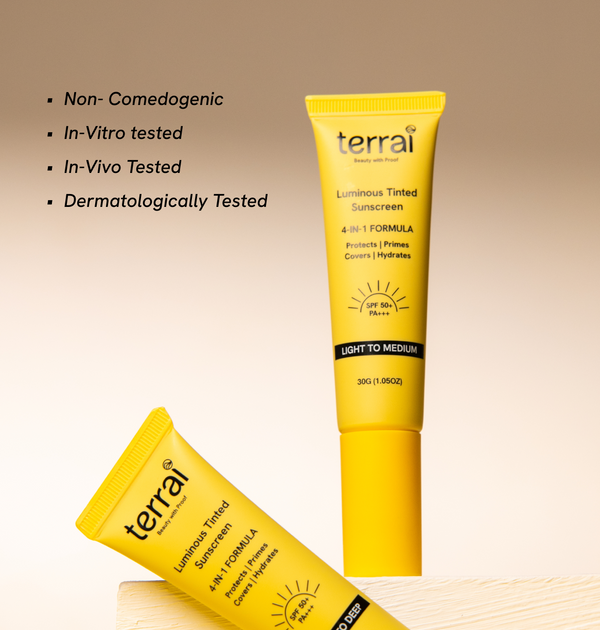
The Luminous Tinted Sunscreen is formulated as a broad-spectrum sunscreen with shade options, so it can be matched more closely to different skin tones rather than leaving a uniform cast.
For pigmentation-prone skin specifically, the shade-matching approach is the more relevant differentiator here: a tinted formula that actually blends in is one people are more likely to wear daily, and daily, consistent wear is what makes any sunscreen effective against pigmentation in the first place.
The rest of the sun care collection includes water-based and mist formats for reapplication, which matters over a full day since a single morning application won't cover UVA exposure that continues into the afternoon.
Final word
Pigmentation and dark spots respond to consistent UV protection as much as, or more than, any treatment serum layered on top. Check the PA rating alongside SPF, wear it daily rather than only outdoors, and treat a tinted formula as a way to make that daily habit easier rather than a replacement for it.
If a broad-spectrum formula with shade options is what you're after, browse the sun care collection and compare the specifics on each product page before deciding.
FAQs
Does sunscreen help with pigmentation and dark spots?
Yes, though indirectly. Sunscreen doesn't fade existing dark spots on its own, but it prevents UV exposure from darkening them further or triggering new pigmentation. It's most effective when paired with a treatment ingredient such as vitamin C or niacinamide, rather than used as a standalone fix.
Which is more important for pigmentation, SPF or PA rating?
PA rating deserves more attention than most people give it. SPF measures UVB protection only, while UVA, the wavelength most linked to pigmentation, is measured by the PA rating. A high SPF with a low PA rating leaves pigmentation-driving rays under-covered.
Does tinted sunscreen help with dark spots more than regular sunscreen?
Tinted sunscreen provides the same UV filtering as a regular formula, with added coverage from iron oxides or pigments that can also help filter visible light. It doesn't fade existing spots by itself, but the added coverage and consistent daily wear it encourages both support a pigmentation routine.
How long does sunscreen take to show results for pigmentation?
Sunscreen alone won't visibly fade existing pigmentation, since its role is prevention rather than correction. Combined with a treatment ingredient, visible change typically takes several weeks, and progress depends on consistent daily protection alongside the treatment product.
Can I stop using sunscreen once my dark spots fade?
No. Pigmentation-prone skin remains prone to new spots forming or old ones darkening again without continued UV protection. Daily sunscreen is a maintenance step rather than a one-time fix, particularly for post-inflammatory marks and sun-triggered pigmentation.

More from the Journal
 A brightening serum gets added to the routine, skin turns pink, flaky or reactive within days, and the assumption is usually that the active...
 Sunscreen goes on the face every morning, and lips get skipped entirely, even though they're just as exposed to UV throughout the day. That...
 A brightening serum goes on for two weeks, nothing visible happens, and it gets shelved as "not working" right around the point it was...