

Sun Exposure Is a Leading Cause of Dark Lips: Are You Protecting Them from UV?
Sunscreen goes on the face every morning, and lips get skipped entirely, even though they're just as exposed to UV throughout the day. That gap is one of the more overlooked reasons lip pigmentation develops or gets darker over time, and it's rarely addressed because sun care and lip care tend to live in separate parts of a routine rather than working together.
The short answer
UV exposure is one of the most significant, and most preventable, contributors to dark lips. Lips have less natural melanin than surrounding facial skin, which means less inherent defence against the same UV exposure, so unprotected lips can develop pigmentation faster per unit of sun exposure than facial skin does. Daily sun protection on lips, alongside whatever else is used to treat existing pigmentation, addresses a cause that's otherwise left completely unmanaged.
Why UV affects lips more than people expect
Less melanin means less natural defence
Melanin doesn't just determine colour; it also provides some natural absorption of UV radiation. Lips generally contain less melanin than the skin surrounding them, which means that the same amount of sun exposure has less natural buffering on lips than it does on cheeks or forehead.
This is part of why lip pigmentation can appear even in people who are otherwise consistent with facial sunscreen. The face is protected, and the lips, sitting right in the middle of it, are left exposed to the same light.
UVA is the wavelength doing most of the damage
UV exposure is made up of UVB and UVA. UVB causes burning and is what the SPF number on a sunscreen measures. UVA penetrates deeper, doesn't cause visible burning, and passes through cloud cover and glass, which means it reaches lips on cloudy days and near windows just as it does in direct sun.
UVA is also the wavelength most strongly linked to pigmentation. For lips, which already have less natural melanin defence, consistent UVA exposure without protection is one of the more direct paths to new pigmentation forming or existing pigmentation getting darker.
Pigmentation from sun exposure compounds over time
A single day of unprotected sun exposure rarely darkens lips noticeably. The effect is cumulative: repeated exposure, day after day, without protection, is what gradually shifts lip colour toward the darker, uneven tone many people associate with sun damage.
This also means the reverse holds. Consistent protection starting now doesn't undo years of prior exposure overnight, but it does remove an active, ongoing cause, which matters for anyone also using a treatment product to fade existing pigmentation.
Why treating pigmentation without sun protection often stalls
Ingredients used to fade lip pigmentation, such as kojic acid, work by slowing new melanin production and letting skin turnover clear existing pigment gradually. That process depends on not adding new pigmentation faster than the old pigmentation clears.
Continued unprotected UV exposure works directly against that. Lips can be actively developing new pigmentation from sun exposure at the same time a treatment product is trying to fade older marks, which is one of the more common, and more fixable, reasons visible progress on dark lips seems to stall.
Common mistakes people make with lip sun exposure
- Protecting the face but forgetting the lips entirely. Facial sunscreen doesn't extend to lips unless it's specifically applied there, and lips are frequently the one area left out.
- Assuming a tinted lip product provides sun protection. Colour and coverage aren't the same as UV filtering; a lip product needs a stated SPF to actually protect against UV.
- Only protecting lips on obviously sunny days. UVA passes through cloud cover, so overcast days still involve meaningful UV exposure.
- Treating pigmentation with active ingredients while skipping sun protection. This is one of the most common reasons a treatment routine underperforms, since ongoing UV exposure works against the fading process in real time.
- Forgetting lips near windows. UVA passes through glass, so time spent at a desk, in a car, or near a window still counts as exposure, even without stepping outside.
Building lip sun protection and pigmentation care into one routine
Addressing sun-driven lip pigmentation works best as two things done together rather than one substituting for the other:
- Daily UV protection on lips, ideally as part of the same routine as facial sunscreen, to prevent new pigmentation and stop existing pigmentation from getting darker.
- A treatment product for existing pigmentation, so the fading process isn't undone by ongoing, unprotected exposure.
Where Lip Ritual and sun protection fit together
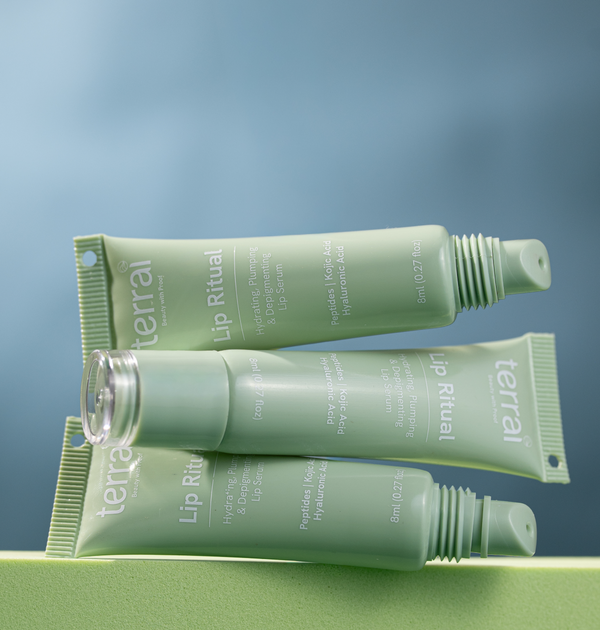
Lip Ritual is formulated to support the pigmentation side of this: kojic acid, vitamin C, licorice leaf extract, green tea extract and a palmitoyl tripeptide work on tone, alongside hyaluronic acid, olive squalane, jojoba oil and saffron oil for hydration and barrier support. It's worth being direct about one thing: Lip Ritual doesn't contain SPF, so it addresses existing pigmentation and hydration rather than UV protection itself.
That's exactly why the two need to work together rather than treating one as a substitute for the other. Terrai's sun care collection covers the UV protection side, and pairing a broad-spectrum sunscreen applied to lips during the day with Lip Ritual's pigmentation-focused formula addresses both the cause of new pigmentation and the fading of existing marks, rather than only one half of the problem.
Final word
Sun exposure is one of the most significant and most preventable contributors to dark lips, made worse by the fact that lips have less natural melanin defence than the rest of the face. Protecting lips from UV daily, alongside a product formulated to address existing pigmentation, covers both the ongoing cause and the visible result, rather than treating just one side of it.
If pigmentation is already visible, pair daily lip sun protection with Lip Ritual and give the combination time to work.
FAQs
Does sun exposure really cause dark lips?
Yes, UV exposure is one of the most significant and preventable causes of lip pigmentation. Lips have less natural melanin than surrounding facial skin, meaning less inherent defence against the same sun exposure, so unprotected lips can develop pigmentation from UV more readily than facial skin does.
Do I need to wear sunscreen on my lips specifically?
Yes, if pigmentation or dark lips are a concern. Facial sunscreen doesn't protect lips unless applied there directly, and lips are commonly left unprotected even in otherwise thorough sun care routines. Look for a lip-safe formula with a stated SPF and PA rating.
Can lip pigmentation from sun exposure be reversed?
Existing pigmentation can fade over time with consistent use of ingredients like kojic acid, which slow new melanin production and support skin turnover, but progress depends on stopping ongoing UV exposure at the same time. Sun protection and a pigmentation treatment generally need to be used together.
Why do my lips look pigmented even though I wear sunscreen on my face?
Facial sunscreen typically doesn't extend onto the lips unless it's specifically applied there. Since lips have less natural melanin defence than facial skin, leaving them unprotected while the rest of the face is covered is a common and often overlooked cause of lip-specific pigmentation.
Does cloudy weather still affect lip pigmentation?
Yes. UVA, the wavelength most linked to pigmentation, passes through cloud cover and glass, so lips remain exposed even on overcast days or indoors near windows. Sun protection on lips is worth maintaining daily rather than only on visibly sunny days.

More from the Journal
 A brightening serum gets added to the routine, skin turns pink, flaky or reactive within days, and the assumption is usually that the active...
 A brightening serum goes on for two weeks, nothing visible happens, and it gets shelved as "not working" right around the point it was...
 Lips crack, darken and show fine lines well before the rest of the face does, and it isn't because they're neglected more than facial...