

Winter Lip Care: How to Treat Chapped, Dry and Peeling Lips
The first cold mornings arrive and so does the familiar sting: tight lips, flaky edges, a crack in the corner that opens every time you smile. You reach for a lip balm every hour, and somehow your lips feel drier than before. Winter is hard on lips for very specific reasons, and once you understand them, the fix becomes much simpler than constant reapplication.
The short answer
Lips get chapped in winter because they have almost no natural oil and a very thin protective layer, while cold air, wind and indoor heating pull moisture out of them quickly. What helps is a two-part approach: hydrate the lips, then seal that hydration in, while stopping the habits that make dryness worse, such as licking, peeling and scrubbing.
A lip treatment that combines humectants (which draw in water) with nourishing oils and emollients (which lock it in) works better than a balm that only sits on the surface.
Why lips get so dry in winter
Lips have no built-in moisture seal
Facial skin has oil glands that help slow moisture loss. Lips have little to none, and their outer protective layer is much thinner than the rest of the face. That means lips depend almost entirely on outside help to stay hydrated. Our guide on why the lip barrier is thinner than you think explains this in detail.
Cold, dry air pulls moisture out
Winter air holds less moisture, so water evaporates from the lips faster. Wind adds to it by stripping away whatever hydration is left on the surface.
Indoor heating makes it worse
Heaters and warm indoor air reduce humidity even further. Spending hours in heated rooms can leave lips just as dry as time outdoors.
Habits that speed it up
- Lip licking: saliva evaporates quickly and leaves lips drier than before
- Peeling flakes: pulls away healthy skin and can cause small cracks and bleeding
- Mouth breathing: especially at night, dries the lips out
- Hot drinks and spicy food: can irritate already cracked lips
- Not drinking enough water: people often drink less in cooler weather
What actually helps chapped lips
1. Hydrate, then seal
Lips need water and a way to keep it there. Look for:
- Humectants such as hyaluronic acid and aloe vera, which draw moisture into the lips
- Emollients and oils such as squalane and jojoba oil, which soften and smooth the surface
- Occlusive ingredients such as plant waxes and castor oil, which form a protective layer to slow moisture loss
Applying humectants alone in very dry air can backfire if nothing seals them in. The combination is what works.
2. Reapply consistently, not constantly
If you’re reapplying every 20 minutes, your product may not be doing enough. A well-formulated lip treatment should keep lips comfortable for hours. Apply in the morning, after meals, before stepping out and at night.
3. Leave the flakes alone
Peeling and biting flakes is tempting, but it reopens cracks and creates irritation. Instead, apply a thick layer of hydrating lip treatment and let the flakes soften and shed naturally.
4. Skip the scrubs
Lip scrubs can feel satisfying, but lip skin is thin and easily irritated. Irritation slows healing and, over time, can contribute to darkening. Softening flakes with hydration is gentler and more effective.
5. Do an overnight treatment
Night is when lips go longest without care. Apply a generous layer of lip treatment before bed so it can work for hours without being wiped off by eating, drinking or talking.
6. Protect your lips from the sun
Winter sun still carries UVA, and lips have less natural melanin defence than the rest of the face. Unprotected exposure can add to dryness and contribute to darkening. Our guide on why sun exposure is a leading cause of dark lips explains why.
7. Support from the inside and around you
Drink water through the day, and if you spend long hours in heated rooms, a humidifier can help keep the air from drying your lips out.
Common winter lip care mistakes
- Licking your lips to relieve dryness. It brings momentary relief and leaves lips drier.
- Peeling or biting dry skin. This creates cracks that take longer to heal.
- Using a scrub on cracked lips. Exfoliating broken skin causes irritation.
- Relying on a product that tingles or stings. Cooling or tingling sensations can irritate chapped lips. If a product stings, switch to something gentler.
- Using a balm that only coats. Some balms sit on the surface without adding hydration. Our guide on lip serum vs lip balm explains the difference.
- Only treating lips when they hurt. Prevention through daily care is much easier than fixing deep cracks.
When to see a doctor
Most winter chapping clears up with consistent care. See a doctor if cracks don’t heal after a couple of weeks of care, keep splitting at the corners of the mouth, bleed often, or come with swelling, crusting, blisters or pain. These can point to an infection, an allergy or another condition that needs proper treatment.
A simple winter lip care routine
- Morning: apply a hydrating lip treatment, then protect lips from the sun if you’re heading out
- Through the day: reapply after meals and drinks
- Before bed: apply a generous layer and leave it on overnight
- All day: avoid licking, peeling and biting your lips
How Lip Ritual helps winter-dry lips
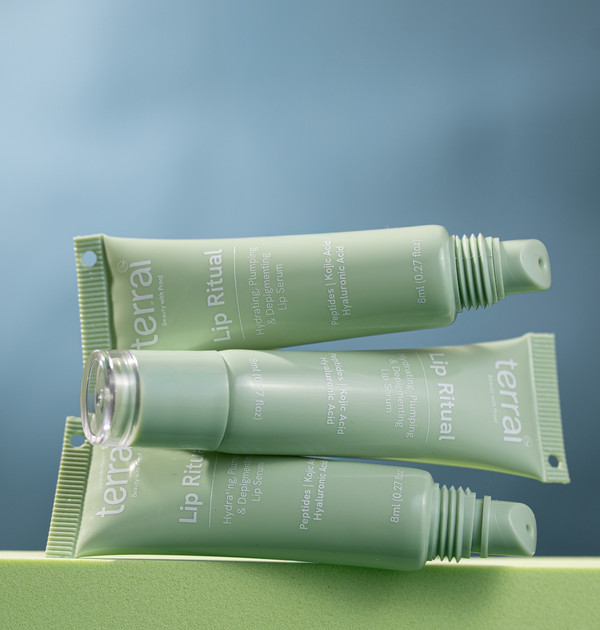
Lip Ritual is a hydrating lip serum in a high-shine gloss format, built around a multi-layer hydration system designed for lips that lose moisture easily.
Draws moisture in: hyaluronic acid and aloe vera help hydrate the lips.
Softens and smooths: olive squalane, jojoba oil and saffron oil condition dry, rough lip skin.
Seals it in: candelilla wax and castor oil help form a protective layer that slows moisture loss.
Comforts and protects: vitamin E adds antioxidant support.
It’s in-vivo tested for hydration and lip pigmentation. In the 28-day, dermatologist-supervised study, lip moisture rose 18% within 30 minutes of application and 33% at two hours, staying 25% higher at eight hours. With twice-daily use, lip dryness fell 37% by day 14 and 49.3% by day 28, while lip cracks fell 29.9% by day 14 and 40.3% by day 28. No adverse events were recorded. Our guide on how long it takes to fix dark, pigmented lips covers the full results and the study’s limits.
Because it also contains kojic acid, vitamin C and licorice leaf extract, it works on the dullness and darkening that dry, chapped lips can develop over time. If darkening is part of your concern, our guide on the real causes of lip pigmentation is worth reading.
Lip Ritual doesn’t contain SPF, so pair it with separate sun protection during the day. It’s formulated and made in house by Terrai, with the full ingredient list and clinical report published on the product page.
Quick winter lip care checklist
- Hydrate and seal with a lip treatment, not just a coating balm
- Apply morning, after meals and before bed
- Let flakes soften instead of peeling them
- Skip lip scrubs on cracked lips
- Stop licking your lips
- Drink water and use a humidifier if indoor air is dry
- Protect lips from the sun during the day
Final word
Winter chapped lips come down to lips that can’t hold onto moisture on their own, facing air that’s constantly pulling it away. Hydrate and seal, apply consistently, let flakes shed naturally and drop the habits that make dryness worse. With the right care, soft and comfortable lips through the whole season are entirely realistic.
For a lip treatment that hydrates, seals and soothes in one step, take a look at Lip Ritual.
FAQs
Why do my lips get chapped in winter?
Lips have almost no oil glands and a very thin protective layer, so they lose moisture easily. Cold, dry air, wind and indoor heating pull moisture out even faster, and habits like lip licking make it worse. Together, these leave lips dry, cracked and peeling.
How can I heal chapped lips fast?
Apply a lip treatment that both hydrates and seals moisture in, several times a day and generously at night. Avoid licking, peeling and scrubbing, which reopen cracks. Mild chapping often improves within days, while deeper cracks can take longer with consistent care.
Should I peel the dry skin on my lips?
No. Peeling pulls away healthy skin underneath and can cause cracks, bleeding and irritation. Instead, apply a thick layer of a hydrating lip treatment and let the flakes soften and shed naturally over a day or two.
Is lip licking bad for dry lips?
Yes. Saliva evaporates quickly and takes moisture with it, leaving lips drier than before. Saliva can also irritate already cracked lips. Keeping a lip treatment handy helps break the habit by relieving the dryness that triggers it.
Do I need sun protection for my lips in winter?
Yes. UVA stays present throughout the year, and lips have less natural melanin defence than facial skin. Sun exposure can add to dryness and contribute to darkening over time, so daytime lip protection is worth keeping up in winter.

More from the Journal
 Copper peptides have moved from niche ingredient lists into mainstream serums, and with the attention has come a mix of genuine interest and confusion....
 Somewhere between the first cool mornings and the end of the year, skin starts to look flat. The glow goes, makeup sits on top...
 Tranexamic acid has gone from a little-known ingredient to one of the most searched names in dark spot care. Alongside the interest comes a...