

Why Are My Lips Dark? The Real Causes of Lip Pigmentation
You have tried the scrubs, the beetroot masks, the overnight balms, and your lips are still darker than they used to be. Before buying anything else, it helps to know what is actually driving the change, because lip pigmentation has several distinct causes and they do not all respond to the same fix. Some are habits you can stop this week. One or two need a doctor rather than a lip product.
The short answer
Most dark lips come down to melanin doing its job in the wrong place. Repeated irritation, friction, heat, chemical exposure or UV light triggers the pigment-producing cells in the lip to overproduce, and because lip skin is exceptionally thin, the result shows up faster and fades slower than it would elsewhere on the face.
The four most common everyday triggers are sun exposure, smoking, staining from hot pigmented drinks, and chronic lip licking. Genetics sets your baseline tone, but it rarely explains a change you have noticed recently.
Why lips pigment faster than the rest of your face
Lip skin is structurally different from facial skin in three ways that matter here.
It is far thinner, with a stratum corneum only a few cell layers deep against roughly fifteen to twenty on the cheek. It has no sebaceous glands, so it cannot produce oil to hold moisture in. And it carries a lighter melanin buffer, leaving it less shielded from UV to begin with.
So lips lose water faster, irritate more easily, and register sun damage sooner. Anything that inflames them repeatedly has a good chance of leaving pigment behind.
The real causes of lip pigmentation
1. Sun exposure
This is the cause most people underestimate. Lips get direct UV all day and almost nobody protects them, because SPF stops at the lip line for most of us.
UV triggers melanin production as a defence response, and repeated exposure gradually darkens the lower lip in particular, since it catches more overhead light than the upper.
2. Smoking
Two things happen at once. Nicotine and tar stain the surface directly, while heat and repeated chemical irritation stimulate melanin production underneath. That combination produces the diffuse, greyish darkening described as smoker's lips. Nicotine also constricts blood vessels, reducing circulation and dulling natural colour further.
3. Caffeine and pigmented drinks
Tea, coffee and colas contribute two ways: staining from the pigments themselves, and thermal irritation from drinking them very hot. Chronic low-level heat is a recognised pigmentation trigger. This is rarely the sole cause, but it compounds the others and is the easiest to moderate.
4. Lip licking and chronic dryness
Saliva evaporates quickly and takes surface moisture with it, so licking leaves lips drier than before. The cycle of dryness, licking, cracking and healing is repeated low-grade inflammation, and inflammation is one of the most reliable routes to post-inflammatory hyperpigmentation anywhere on the body. Biting and peeling flakes do the same.
5. Reactions to lip products or toothpaste
Pigmented contact cheilitis is a real and under-diagnosed cause. Certain dyes, fragrances and preservatives in lipsticks, long-wear formulas and toothpastes can trigger a low-grade allergic reaction that leaves pigment behind rather than obvious redness.
If your lips darkened after switching products, this is worth investigating before anything else.
6. Nutritional and medical causes
Iron and vitamin B12 deficiency can both show up as darker or duller lips. Some medications, including certain antibiotics and chemotherapy agents, cause drug-induced pigmentation. Hormonal shifts during pregnancy can affect lips alongside facial melasma.
See a doctor rather than reaching for a lip product if the darkening appeared suddenly, affects only one patch, has changed shape or texture, or comes with fatigue and other symptoms. Pigmentation that behaves unusually deserves a proper look.
7. Genetics and natural tone
Some people simply have more melanin in their lips, and two-tone lips, where the upper lip is naturally darker than the lower, are common and normal. This is a baseline, not a problem to be corrected, and no product will change it substantially.
How to work out which one applies to you
- Darkening mainly on the lower lip points towards sun exposure.
- Even, greyish darkening across both lips in a smoker points to nicotine and heat.
- Darkening that began after a new lipstick or toothpaste suggests a contact reaction.
- Darkening alongside constant flaking and cracking points to the dryness and licking cycle.
- Lips that have always been this tone are almost certainly genetic.
Most people find two or three causes overlapping rather than one.
What actually helps
Fixing the cause comes first. Continuing to smoke while applying a brightening treatment is working against yourself.
Beyond that, the ingredient categories with real evidence behind them for pigmentation are tyrosinase inhibitors, which slow the enzyme that produces melanin. Kojic acid is the most commonly used of these in lip care. Vitamin C works as an antioxidant and pigment inhibitor. Licorice extract is a gentler option often used alongside them.
Hydration matters more than people expect, because a lip barrier that keeps cracking keeps generating new inflammation. Hyaluronic acid, squalane and botanical oils address that side.
Protection is the part everyone skips. Fading pigment while continuing to expose bare lips to UV is a treadmill. Kojic acid can also increase sun sensitivity, which makes daily protection more important, not less, once you start treating. Extending your sun care routine to the lip line, or using a lip product with UV protection, is what stops the cycle restarting.
On timelines, be realistic. Pigmentation that took years to develop responds over weeks to months of consistent use, not days.
Common mistakes
- Scrubbing. Physical exfoliation on already-inflamed lips adds irritation, which adds pigment.
- Home remedies with lemon or baking soda. Both disrupt the barrier on skin this thin.
- Treating only at night. Daytime protection does more for pigmentation than any overnight mask.
- Switching products every fortnight. Nothing gets a fair trial in two weeks.
- Ignoring the underlying habit. No active outperforms an ongoing trigger.
How Lip Ritual approaches this
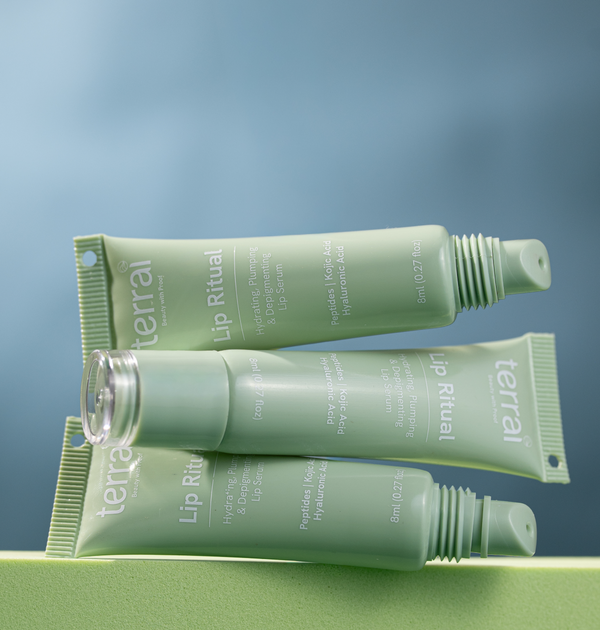
Lip Ritual from Terrai is built around the treat-and-hydrate combination described above, in a gloss format rather than a balm.
The formula uses kojic acid alongside vitamin C, a palmitoyl tripeptide, licorice leaf extract and green tea extract for the pigmentation and tone side. Hyaluronic acid, olive squalane, jojoba oil and saffron oil handle the barrier and hydration side. The brand describes the finish as glass-like and non-sticky, and positions it as a serum you can wear as a gloss rather than a treatment you apply only at night.
The part worth checking yourself is the documentation. In-vivo testing for both lip pigmentation and hydration, dermatological testing, and non-toxic and cruelty-free certifications are published as downloadable reports on the product page. In-vivo means tested on human volunteers rather than in a lab dish, and very few products in this category publish it.
One honest caveat: the formula does not contain SPF. It is a treatment for existing pigmentation, not protection against the cause, so pair it with sun protection if UV is one of your triggers.
The bottom line
Lip pigmentation is usually the result of several small, repeated insults rather than one dramatic event, which is why identifying your own triggers matters more than the product you buy afterwards. Work out which of the seven causes above apply to you, remove what you can, then give a treat-and-protect routine a few consistent months.
If dryness and dullness are part of your picture, a treatment gloss is an easy place to begin.
FAQs
Can dark lips become pink again?
Often, partly, depending on the cause. Pigmentation from sun exposure, smoking, staining or chronic dryness usually lightens over several weeks to months once the trigger is removed and a tyrosinase-inhibiting ingredient is used consistently. Genetic lip tone will not change substantially, and darkening from a medical cause needs the underlying issue treated first.
Does kojic acid work on lips?
Kojic acid inhibits tyrosinase, the enzyme that drives melanin production, which is why it is widely used for lip pigmentation. It works gradually rather than instantly. Because it can increase sun sensitivity, daily lip protection alongside it is important. Patch test first if your lips are prone to reacting.
Why are my lips getting darker even though I do not smoke?
Sun exposure is the most common answer, since almost nobody applies SPF to their lips. Chronic lip licking, hot pigmented drinks, reactions to lipstick or toothpaste, and iron or B12 deficiency are the other usual explanations. If the change was sudden or affects only one patch, see a doctor.
How long does it take to fade lip pigmentation?
Expect weeks to months rather than days. Pigment that built up over years sits in the deeper layers and clears gradually as skin turns over. Most people see texture and hydration improve first, with tone following later. Consistency matters far more than the strength of any single product.
Is lip serum better than lip balm for dark lips?
They do different jobs. A balm mainly seals in moisture and relieves dryness, which helps prevent the inflammation that causes pigmentation, but it does not act on melanin. A serum with actives such as kojic acid or vitamin C targets the pigment itself. For dark lips, the treatment ingredients are what matter.

More from the Journal
 A brightening serum gets added to the routine, skin turns pink, flaky or reactive within days, and the assumption is usually that the active...
 Sunscreen goes on the face every morning, and lips get skipped entirely, even though they're just as exposed to UV throughout the day. That...
 A brightening serum goes on for two weeks, nothing visible happens, and it gets shelved as "not working" right around the point it was...