

How Long Until You See Results From a Brightening Serum? (A Realistic Timeline)
A brightening serum goes on for two weeks, nothing visible happens, and it gets shelved as "not working" right around the point it was actually starting to. That pattern repeats constantly, and it's less about the product than about a mismatch between how skin actually changes and how quickly people expect to see it.
The short answer
Most brightening ingredients need somewhere in the range of 8 to 12 weeks of consistent use before visible, meaningful change in tone and dark spots shows up. That's not a marketing minimum or a way to buy time. It reflects how long skin's natural renewal cycle actually takes to surface the effects of an active ingredient working underneath.
Texture and hydration-related changes, like smoother, more comfortable skin, often show up faster. Actual tone and pigmentation change takes longer, and that gap is the main reason people give up right before results would have appeared.
Why brightening takes longer than other skincare changes
Skin cell turnover sets the pace
The outermost layer of skin renews itself through a process called cell turnover, where new cells form at the base of the epidermis and gradually move to the surface, replacing older cells that shed off. This cycle generally runs somewhere around four to six weeks in adult skin, though it varies by age and individual factors, and tends to slow with age.
Ingredients that work on pigmentation, such as niacinamide or tranexamic acid, typically act by slowing new melanin production or interrupting the pathway that produces pigment. Existing pigmented cells still need to work their way through that full turnover cycle before they're replaced with less pigmented ones. That's a structural limit, not a reflection of whether the product is working in the meantime.
Multiple turnover cycles compound the effect
Because pigment sits at different depths in the skin, a single turnover cycle typically isn't enough to clear it all. Visible improvement tends to build across two or more full cycles, which is roughly where the commonly cited 8 to 12 week window comes from industry-wide, rather than being specific to any one formula or brand.
Hydration and texture move on a different, faster timeline
Ingredients like hyaluronic acid and peptides that support hydration and skin barrier function tend to show effects much sooner, often within days, because they act on the skin's surface and moisture content directly rather than waiting on a renewal cycle. This is why skin can feel noticeably smoother or more comfortable well before any visible change in tone or dark spots appears, and it's a useful early signal that a product is doing something, even before the slower changes catch up.
What a realistic timeline generally looks like
- First 1 to 2 weeks: hydration and texture-related changes are the most likely visible effect. Tone change isn't expected yet, and its absence at this stage isn't a sign of an ineffective product.
- 4 to 6 weeks: roughly one turnover cycle has passed. Subtle tone improvement may become apparent to some people, though this varies individually and isn't guaranteed at this exact point.
- 8 to 12 weeks: this is the window most consistently associated with visible improvement in tone and dark spots across brightening ingredients generally, reflecting multiple turnover cycles.
- Beyond 12 weeks: deeper or longstanding pigmentation typically continues improving with ongoing use rather than plateauing at the 12-week mark, though this depends on the individual and the type of pigmentation involved.
What affects how fast or slow results show up
Tends to move faster: consistent daily application without gaps; recent rather than longstanding pigmentation; combined with daily sun protection; younger skin, where cell turnover runs faster.
Tends to move slower: inconsistent or occasional use; deep-set or years-old pigmentation; continued unprotected sun exposure, which actively works against the fading process; older skin, where turnover naturally slows.
Common mistakes that reset the timeline
- Switching products every few weeks. Every switch effectively restarts the clock, since the skin hasn't completed even one full turnover cycle on the previous formula.
- Judging results at 2 weeks. This is early enough that tone change isn't expected yet under normal skin biology, regardless of the product.
- Skipping daily sunscreen. Unprotected UV exposure can generate new pigmentation at the same time a brightening serum is trying to fade existing pigmentation, which works directly against visible progress.
- Using it inconsistently. Skipped days extend the practical timeline beyond the ranges above, since the ingredient needs sustained exposure to work through the mechanisms described.
- Expecting a linear, day-by-day visible change. Because the process depends on cell turnover cycles rather than a direct topical effect, progress tends to become apparent in steps rather than gradually each day.
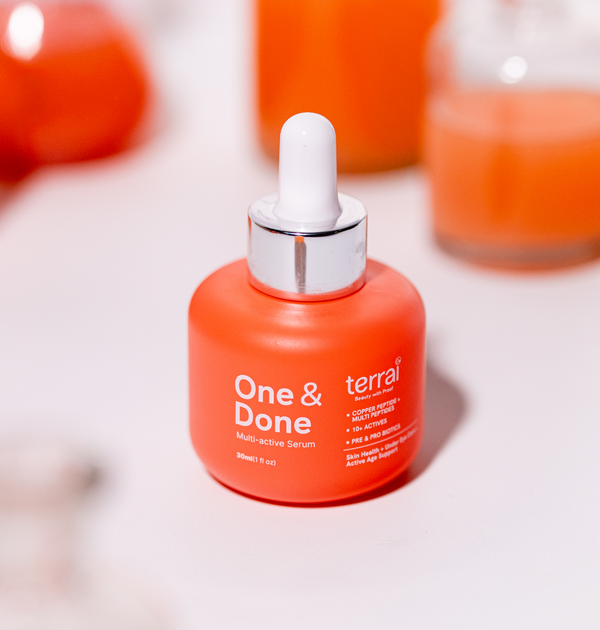
Where One & Done fits into this timeline
The One & Done Serum is formulated as a multi-corrective serum addressing tone, texture and spot concerns in a single formula, which is relevant to the timeline question in one specific way: layering fewer separate actives, applied consistently, tends to be easier to stick with over the 8 to 12 week window than managing several products with different application schedules.
Consistency is the variable that most affects whether the general timeline above plays out as expected, more than any single ingredient does on its own.
Final word
Eight to twelve weeks is a realistic, biology-based timeline for visible change from a brightening serum, not a hedge or a low bar. Hydration and texture improvements usually arrive first, tone change follows on the slower schedule that skin's own turnover cycle sets, and consistent daily use without gaps is what determines whether that timeline holds.
If a single formula addressing multiple concerns fits how you'd realistically stick with a routine for 8 to 12 weeks, take a look at One & Done and give it that full window before judging results.
FAQs
How long does it take for a brightening serum to work?
Most brightening ingredients need around 8 to 12 weeks of consistent use before visible change in tone and dark spots appears. This reflects the skin's natural cell turnover cycle rather than how quickly a product acts, so texture and hydration often improve sooner while tone takes longer.
Why hasn't my skin tone changed after 2 weeks of using a brightening serum?
Two weeks is generally too early for visible tone change, since skin's turnover cycle typically runs four to six weeks, and pigmentation improvement usually needs multiple cycles to become visible. Hydration or texture changes may already be noticeable at this stage even though tone hasn't shifted yet.
Does switching brightening products speed up results?
No, switching tends to slow things down. Each new product effectively restarts the timeline, since skin hasn't completed a full turnover cycle on the previous formula. Sticking with one consistent product for the full 8 to 12 week window generally gives a more accurate read on whether it's working.
Do I need sunscreen while using a brightening serum?
Yes. Unprotected UV exposure can generate new pigmentation while a brightening serum is working to fade existing pigmentation, which can stall or reverse visible progress. Daily sun protection alongside a brightening routine is generally necessary for the timeline to play out as expected.
Will brightening serum results eventually plateau?
For deep-set or longstanding pigmentation, improvement typically continues beyond 12 weeks with ongoing consistent use rather than stopping abruptly at that point, though the rate of visible change may slow as the more superficial pigmentation clears first.

More from the Journal
 A brightening serum gets added to the routine, skin turns pink, flaky or reactive within days, and the assumption is usually that the active...
 Sunscreen goes on the face every morning, and lips get skipped entirely, even though they're just as exposed to UV throughout the day. That...
 Lips crack, darken and show fine lines well before the rest of the face does, and it isn't because they're neglected more than facial...