

Lip Serum vs Lip Balm: What's the Difference (and Which Do You Actually Need)?
If you have been using a balm for months hoping your lips will get less dark, this is why nothing has happened. A balm is not failing at its job. It is doing its job perfectly, and its job was never lip pigmentation.
The short answer
A lip balm seals. A lip serum treat.
Balms sit on the surface and stop moisture escaping, which relieves dryness and prevents cracking. Serums carry active ingredients into the lip to act on pigmentation, texture and volume over time.
If your problem is dry, chapped lips, a balm solves it. If your problem is dark lips, uneven or ageing lips, a balm will keep them comfortable while the underlying issue stays exactly where it is.
What a lip balm actually does
Balms are built from occlusives and emollients: waxes, butters, petroleum, oils. Their function is barrier repair by physical means.
Lips have no oil glands, so they cannot produce sebum to hold water in the way facial skin does. A balm substitutes for that missing layer. It reduces water loss, softens flaking, and gives immediate comfort.
That is genuinely valuable, and it is not a lesser product category. Preventing the dryness-cracking-healing cycle matters, because that cycle is repeated low-grade inflammation, and inflammation is one of the main routes to pigmentation in the first place.
What a balm does not do is change anything structural. There are no actives working on melanin, collagen or texture. Stop using it and lips return to baseline within days.
What a lip serum actually does
Serums are formulated to deliver active ingredients rather than to seal.
The actives vary, but the ones with real evidence behind them for lips fall into three groups:
- Tyrosinase inhibitors such as kojic acid and licorice extract, which slow melanin production and address pigmentation
- Antioxidants such as vitamin C, which work on dullness and uneven tone
- Peptides, which support the structural side, meaning texture and fullness
Serums also hydrate, usually through humectants like hyaluronic acid rather than heavy occlusives. That is why a serum alone can feel less immediately cushioning than a balm, though a well-formulated one closes that gap.
The trade-off is time. A balm works in thirty seconds. A serum works over weeks, and only with consistent use.
Side by side
|
Lip balm |
Lip serum |
|
|
Primary job |
Seal moisture in |
Deliver actives |
|
Works on pigmentation |
No |
Yes, gradually |
|
Works on texture and fine lines |
No |
Yes, with peptides |
|
Time to results |
Immediate comfort |
Measurable from 2 weeks |
|
Typical base |
Waxes, butters, occlusive oils |
Humectants, lighter oils, actives |
|
Effect after stopping |
Returns to baseline quickly |
Some change persists |
|
Best for |
Dry, chapped, cracked lips |
Dark, uneven, ageing lips |
Which do you actually need?
Work from the problem, not the format.
- Lips crack, flake or split, especially in winter. A balm. This is a barrier problem and a balm is the correct tool.
- Lips are darker than they used to be, or darker than the surrounding skin. A serum with a tyrosinase inhibitor. A balm will not touch this.
- Lips look thinner or have vertical lines forming. A serum with peptides.
- Both dryness and darkness. A serum, provided it also hydrates properly. Treating the dryness matters here, because chronic dryness is often what caused the pigmentation.
- Occasional dryness, nothing else. A balm is enough. Not everyone needs a treatment product.
The format problem nobody talks about
Here is the practical issue with treating lips. Actives need contact time, and a serum applied once at night gets around eight hours on skin you are eating and drinking with for the other sixteen.
This is why the gloss format matters more than it sounds. A treatment you can wear through the day, because it also looks good, gets applied four or five times rather than once. For an ingredient that works gradually and only with consistency, frequency of application is not a minor detail. It is most of the outcome.
That is the actual argument for a serum in a gloss format, and it has nothing to do with shine.
Can you use both?
Yes, and for very dry lips it is the better approach.
Apply the serum first onto clean lips, let it absorb for a minute, then seal with a balm at night. The serum delivers actives, the balm stops them and the moisture escaping while you sleep.
Through the day, a serum with adequate hydration usually does both jobs on its own.
Common mistakes
- Expecting a balm to fade pigmentation. It has no mechanism for it.
- Layering balm over serum immediately. Give the serum a minute to absorb first.
- Using a balm with menthol or camphor on cracked lips. The tingle is irritation, and irritation is what causes pigmentation.
- Switching products every two weeks. No active shows anything meaningful in that time.
- Exfoliating before a serum. Scrubbing already-thin lip skin adds inflammation.
- Treating at night only. Daytime protection contributes more to lip tone than any overnight treatment, since sun exposure is a leading cause of dark lips.
Where Lip Ritual sits
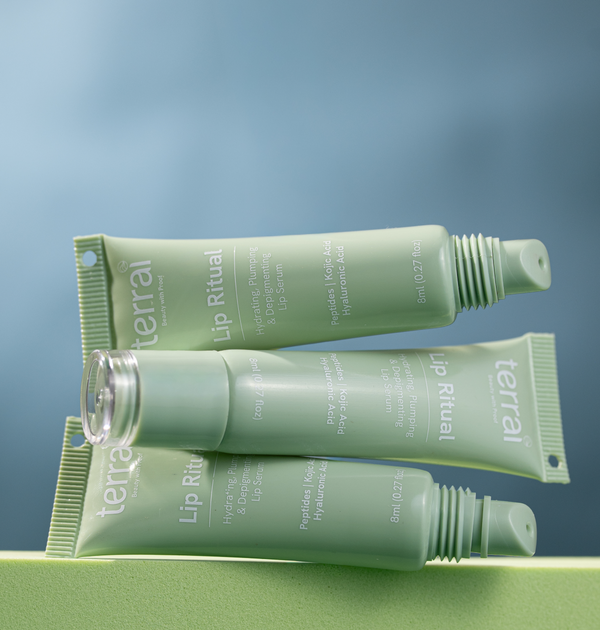
Lip Ritual is built around the contact-time argument above. It is formulated as a treatment serum in a gloss format, so the actives stay on the lips across the day rather than only overnight.
On the treatment side it uses kojic acid, vitamin C, licorice leaf extract and green tea extract for pigmentation and tone, with a palmitoyl tripeptide for the structural side. On the hydration side, hyaluronic acid, olive squalane, jojoba oil and saffron oil handle conditioning and barrier support, which is the part that keeps a treatment product from becoming a source of irritation itself.
The testing is published rather than asserted. In-vivo studies for both lip pigmentation and hydration, plus dermatological testing and non-toxic and cruelty-free certifications, are downloadable on the product page. In-vivo means tested on human volunteers rather than in a lab dish, which is uncommon in this category.
One caveat: it contains no SPF. Since sun exposure is among the leading causes of lip pigmentation, pair it with daytime lip protection if UV is one of your triggers. The wider Terrai range covers sun care separately.
The bottom line
Balms and serums are not competing products, they are answers to different questions. A lip balm manages symptoms of dryness and does it well. A lip serum works on the cause of lip pigmentation, thinning and uneven texture, gradually.
If your lips are dry, buy a balm. If they are dark, a balm was never going to fix that, and the months you spent waiting were not your fault.
FAQs
What is the difference between a lip serum and a lip balm?
A balm seals moisture in using waxes and butters, relieving dryness immediately but not changing anything underneath. A serum delivers active ingredients that work on pigmentation, texture and fullness over weeks. Balms manage symptoms, serums address causes. Many people benefit from using both.
Is lip serum better than lip balm for dark lips?
Yes. Balms have no mechanism for acting on melanin, so they keep lips comfortable while the darkness stays. A serum containing a tyrosinase inhibitor such as kojic acid slows melanin production, fading pigmentation gradually with consistent daily use.
Can I use lip serum and lip balm together?
Yes, and it suits very dry lips well. Apply the serum to clean lips first, allow a minute for absorption, then seal with a balm, particularly overnight. The serum delivers actives while the balm prevents moisture and product escaping while you sleep.
How long does lip serum take to work?
Hydration and softness usually improve within days. Pigmentation and tone take longer, with measurable change from around two weeks and clearer results by four weeks of twice-daily use, because melanin-inhibiting ingredients slow new pigment while existing pigment clears through natural turnover.
Do I need a lip serum if my lips are not dry?
Only if you have a concern a balm cannot address, such as darkening, uneven tone, or fine lines forming on the lip. If your lips are comfortable and you are happy with their tone, a balm as needed is genuinely enough. Not every routine needs a treatment step.

More from the Journal
 A brightening serum gets added to the routine, skin turns pink, flaky or reactive within days, and the assumption is usually that the active...
 Sunscreen goes on the face every morning, and lips get skipped entirely, even though they're just as exposed to UV throughout the day. That...
 A brightening serum goes on for two weeks, nothing visible happens, and it gets shelved as "not working" right around the point it was...