

SPF 50 + PA++++ for Indian Skin: What the Numbers Actually Mean
SPF 30 blocks about 97% of UVB. SPF 50 blocks about 98%. Put like that, picking one over the other sounds like it barely matters, and a lot of what's written online treats it that way. What that comparison leaves out is what happens to those numbers once you apply sunscreen the way people actually apply it, and the fact that the SPF figure alone tells you nothing about the rays that drive most pigmentation.
The short answer
Both SPF 50 and SPF 30 are useful, and the right one depends on how much sun exposure you're actually getting that day. What matters more than the SPF number on either is the PA rating next to it: PA++++ is the highest UVA grade available, and it's worth checking regardless of which SPF you reach for.
For a full day outdoors, a higher SPF gives you more margin once real-world application is accounted for. For topping up over makeup, commuting, or a mostly-indoor day near windows, a lighter SPF 30 format can be the more practical choice, since the sunscreen you'll actually reapply protects you more than the one you skip.
What UV exposure looks like across the day
This is where a lot of general sunscreen advice stops being relevant locally.
UV index across Indian cities tends to peak between 11:00 and 13:00, and stays in the high-to-extreme range at peak hours for most of the year. By around 09:00, the index has typically already crossed into the high range, and it doesn't drop back below moderate until late afternoon.
Winter offers less of a break than most people assume. Peak UV index through December and January generally sits in the moderate-to-high range rather than falling close to zero, unlike in temperate countries where winter sun exposure genuinely drops off. On the WHO scale, 6 to 7 is classed as high, 8 to 10 as very high, and 11 or above as extreme. UV index runs independently of temperature, so exposure adds up on cool or overcast days too.
None of this means any single day is dangerous on its own. It means the cumulative exposure adds up faster here than in the climates a lot of general sunscreen guidance was written for, which is why getting into the habit of daily protection matters more than chasing the highest possible SPF.
Why application matters more than the label suggests
SPF is measured in a lab at an application density of 2 mg per square centimetre. Most people apply somewhere between a quarter and half of that in practice.
Protection doesn't decline in proportion to how little you apply. It drops off faster, so a thinly applied SPF 50 can end up performing closer to a well-applied SPF 20 or 30. That's true of any sunscreen at any SPF: the number on the bottle is a ceiling, not a guarantee, and application habits close more of that gap than the SPF figure itself.
This is also the argument for having more than one format in rotation. A rich SPF 50 cream applied once in the morning and never topped up can protect less over a full day than a lighter formula reapplied properly.
The PA rating is the part people skip
SPF measures UVB only, the rays that cause sunburn. It says nothing about UVA, which is why broad-spectrum protection, meaning coverage across both, matters more than a single high number.
UVA makes up the large majority of the UV reaching skin, penetrates deeper, drives photoageing, and passes through glass. UVB is a smaller share of total exposure, causes visible burning, and is largely blocked by glass. For skin concerns like pigmentation, tanning and uneven tone, UVA is usually doing most of the damage that shows up in the mirror.
What the plus signs mean
The PA system grades UVA protection using a measure called persistent pigment darkening.
- PA+ offers some UVA protection
- PA++ is moderate
- PA+++ is high
- PA++++ is the highest grade available
A sunscreen can carry a high SPF and only PA++ or PA+++, and that combination is common. Checking both numbers matters more than looking at the SPF figure alone, whichever SPF level you choose.
Choosing between SPF 50 and SPF 30 in practice
- Full day outdoors, travel, or extended sun exposure: a higher SPF with PA++++ gives more headroom once under-application is factored in.
- Reapplication over makeup, commuting, or mostly-indoor days near windows: a lighter SPF 30 PA+++ format, such as a hydrating mist, is often the one you'll actually use without disrupting your look.
- Either way: apply generously, reapply on schedule, and don't skip protection just because it's cloudy or you're indoors near glass.
Common mistakes
- Choosing by SPF number alone. A high SPF paired with a low PA rating leaves the ageing and pigmentation rays under-covered.
- Applying only before heading out. Most exposure accumulates in small doses across an ordinary day, including time spent near windows.
- Skipping on overcast days. UV index doesn't track temperature or cloud cover.
- Assuming deeper skin tones don't need it. More melanin offers some baseline protection against burning but doesn't prevent photoageing or pigmentation.
- Using a body sunscreen on the face. A dedicated sunscreen for face is usually a better fit, since texture is the main reason people stop wearing SPF altogether.
How the Terrai sun care range fits this
The Aqua Radiance Sunscreen is formulated to SPF 50+ with PA++++, the highest UVA grade. The brand states 98% UVA and UVB protection, zero white cast, and water resistance for up to 80 minutes, a figure derived from a test protocol. It's a water-based formula hydrated with olive squalane, hyaluronic acid and vitamin C rather than heavy oils, which supports the generous, willing reapplication that matters more than the SPF number alone.
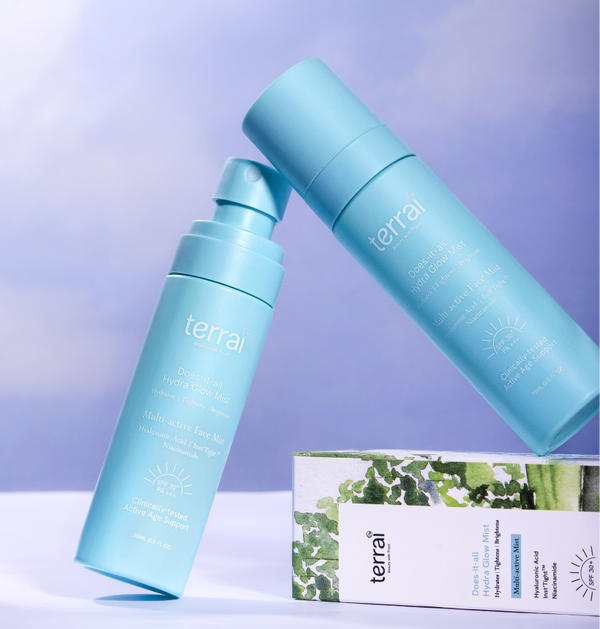
For topping up through the day, the Hydra Glow Mist carries SPF 30 with PA+++ in a hydrating face mist format designed to go over makeup. It's built for the moments a cream reapplication isn't practical, working alongside a higher-SPF base layer rather than replacing it.
Test reports covering SPF and PA rating, water resistance, non-comedogenic status and dermatological testing for the Aqua Radiance formula are published on its product page. The rest of the sun care collection covers tinted and mist formats for different parts of the same routine.
[Internal link suggestion: The Serum, Sunscreen, Mist Routine guide]
[Internal link suggestion: Sunscreen for Humid Weather guide]
The bottom line
Both SPF 50 and SPF 30 have a place, provided the PA rating is high in either case and the formula is one you'll actually reapply. Check both numbers on the pack, apply more than feels necessary, and match the format to how the day is actually going to go rather than defaulting to whichever number sounds bigger.
FAQs
Do I need SPF 50, or is SPF 30 enough?
Both can work well, depending on the day. SPF 50 gives more margin for extended outdoor exposure once under-application is factored in, while a lighter SPF 30 format is often easier to reapply over makeup or during a mostly-indoor day. The PA rating matters more than the SPF number either way.
What does PA++++ mean on sunscreen?
PA rates protection against UVA rays, which cause tanning, pigmentation and photoageing. The scale runs from PA+ to PA++++, with four pluses being the highest grade available. SPF only measures UVB, so a sunscreen can carry a high SPF with a lower PA rating, which is why checking both matters.
Do I need sunscreen in winter?
Generally yes. Peak UV index through December and January tends to stay in the moderate-to-high range rather than dropping close to zero, unlike in climates with a genuine seasonal drop in sun exposure. Daily protection is worth keeping up year-round rather than pausing it seasonally.
Does darker skin need high-SPF sunscreen?
Yes. Higher melanin provides some baseline protection against burning, but it doesn't prevent photoageing, tanning or pigmentation. Hyperpigmentation and uneven tone are common skin concerns regardless of skin tone, and UVA exposure is a leading driver of both.
Does sunscreen work through glass?
Sunscreen works wherever it's applied, but the relevant question is what reaches you. UVA passes through glass while UVB is largely blocked, so time spent at a window seat in a car or office still exposes skin to the rays that drive ageing and pigmentation, even without visible burning.
Shop the products

Related collections


More from the Journal
 A brightening serum gets added to the routine, skin turns pink, flaky or reactive within days, and the assumption is usually that the active...
 Sunscreen goes on the face every morning, and lips get skipped entirely, even though they're just as exposed to UV throughout the day. That...
 A brightening serum goes on for two weeks, nothing visible happens, and it gets shelved as "not working" right around the point it was...