

Do You Really Need to Reapply Sunscreen Every 2 Hours? Busting the Myths
Sunscreen goes on at 8 am, and by lunch nobody has touched it again. Some people are certain it’s still working. Others think it expired at 10 am sharp. Both are working from myths. The “every 2 hours” rule is real advice, but it’s a guideline built around average conditions, not a countdown timer, and understanding what it actually means changes how you use sunscreen throughout the day.
Yes, reapplying sunscreen roughly every 2 hours is a sound default when you’re outdoors or in direct sunlight. But the reason isn’t that sunscreen switches off at the 2-hour mark. It’s that sweat, oil, touching your face, wiping, water and friction gradually remove the protective film, so the protection you applied in the morning gets thinner as the day goes on.
That means the real rule is more practical than a timer: reapply sooner when you’re sweating, swimming or outside for long stretches, and reapply at least once later in the day even on quieter, mostly indoor days.
Myth 1: “Sunscreen stops working after exactly 2 hours”
Sunscreen doesn’t have a built-in expiry clock once it’s on your skin. The 2-hour guidance exists because, under normal everyday conditions, enough of the film has worn off by then that protection can no longer be relied on.
What actually reduces protection:
- Sweat and sebum breaking down the film on the skin’s surface
- Touching your face, wiping your nose, or resting your face on your hands
- Water, whether swimming, washing your face or heavy humidity
- Friction from masks, towels, phone screens and clothing
On a day spent outdoors and sweating, protection can thin out well before 2 hours. On a quiet day indoors, it wears off more slowly. The number is a sensible average, not a precise measurement.
Myth 2: “A higher SPF means I can reapply less often”
This is one of the most common reapplication myths. SPF measures how much UVB protection a formula gives when applied properly. It doesn’t measure how long that protection stays on your skin.
An SPF 50 sunscreen and an SPF 30 sunscreen wear off through sweat, oil and touch at much the same rate, because the factors removing them are physical, not related to the SPF number. A higher SPF gives you more protection while it’s on, which is useful since most people under-apply, but it doesn’t stretch the reapplication window.
Whichever SPF sunscreen you use, the reapplication habit is what keeps it working through the afternoon.
Myth 3: “Water-resistant sunscreen doesn’t need reapplying”
Water resistance is tested for a specific time, usually 40 or 80 minutes of water exposure. After that window, the formula needs to go back on, especially after towelling off, which removes a lot of product on its own.
There’s no such thing as a truly waterproof sunscreen. A stated figure in minutes is the honest version of that claim, and it tells you exactly when to reapply after swimming or heavy sweating. If sweat and humidity are your main problem, our guide on sunscreen for humid summers that doesn’t melt off by noon covers this in more detail.
Myth 4: “If I’m indoors, I don’t need to reapply at all”
Staying indoors does reduce your UV exposure considerably, but it doesn’t remove it entirely. UVA, the wavelength linked to tanning, pigmentation and premature ageing, passes through window glass. Sitting near a window at work, at home or in a car still counts as exposure.
If you’re mostly indoors away from windows, your sunscreen wears off more slowly and strict 2-hour reapplication is less critical. If you sit by a window, or step out at lunch, a midday top-up is worth it. This matters even more for anyone working on dark spots, since UVA keeps adding new pigmentation while treatment products try to fade the old. Our guide on sunscreen for pigmentation and dark spots explains why.
Myth 5: “Applying a thick layer in the morning covers the whole day”
Applying enough sunscreen is important. Most people use far less than the amount sunscreen is tested at, roughly two finger-lengths for the face and neck. But a generous morning layer still wears off through the day in the same way a thin one does.
A thicker first layer gives you better protection at the start. It doesn’t replace reapplying later. The most effective approach is both: apply the right amount in the morning, then top up through the day.
Myth 6: “You can’t reapply sunscreen over makeup”
This myth is the main reason people skip reapplication. Rubbing a cream sunscreen over foundation at 2 pm isn’t realistic for most people, so they simply don’t.
There are easier options:
- An SPF face mist, sprayed evenly over makeup from a short distance
- A tinted sunscreen that works as both protection and light coverage, so reapplying doesn’t undo your look
- Pressing, not rubbing, a light fluid sunscreen with clean fingertips or a sponge
The easiest reapplication method is the one you’ll actually do. A format that fits your day protects you more than a stronger product that stays in your bag.
Myth 7: “Makeup with SPF counts as reapplication”
Foundation or powder with SPF adds some protection, but almost nobody applies makeup in the quantity needed to reach the SPF on the label. A light dusting of SPF powder gives a fraction of the stated protection.
Makeup with SPF works best as a bonus layer on top of proper sun protection for face, not as a substitute for applying or reapplying sunscreen.
Myth 8: “Lips don’t need reapplying”
Lips are often left out of sun care completely, and when they are protected, the product wears off even faster than on the face because of eating, drinking and talking. Lips also have less natural melanin defence than facial skin. Our guide on why sun exposure is a leading cause of dark lips explains why lip protection deserves its own spot in your routine.
A realistic reapplication routine
Instead of watching the clock, match reapplication to your day:
- Morning: apply sunscreen for face and neck generously, about 10 to 15 minutes before heading out.
- Outdoors or sweating: reapply roughly every 2 hours, and right after swimming, towelling off or heavy sweating.
- Mostly indoors near windows: top up once around midday.
- Wearing makeup: use an SPF mist or tinted sunscreen for midday touch-ups.
- Before heading out in the evening sun: one more layer if you’ll be outside before sunset.
How the Terrai sun care range fits a real day
Different moments call for different formats, which is how the Terrai sun care collection is built.
For the morning base layer, the Aqua Radiance Sunscreen is a water-based SPF 50+ PA++++ formula with water resistance stated at up to 80 minutes, a figure that tells you exactly when to reapply after swimming or heavy sweating. Its watery texture, hydrated with olive squalane, hyaluronic acid and vitamin C, is light enough that applying a generous amount doesn’t feel heavy.
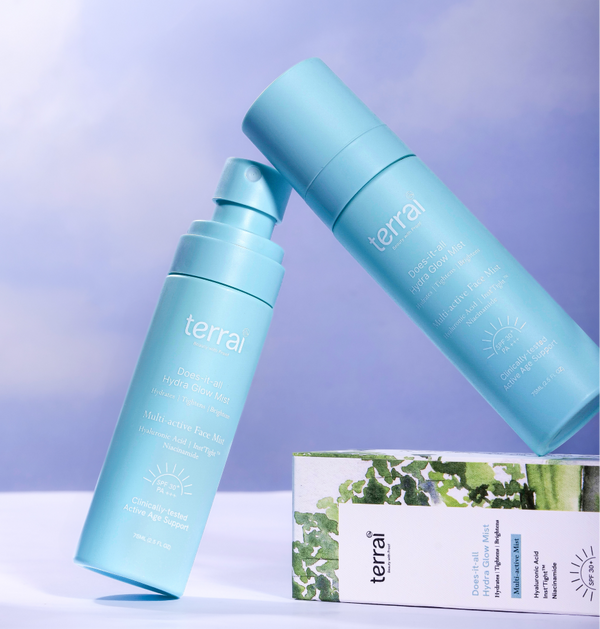
For midday top-ups over makeup, the Hydra Glow Mist is a hydrating face mist with SPF 30 PA+++, designed to be sprayed over your look without disturbing it. It’s the format that makes regular reapplication practical rather than a chore.
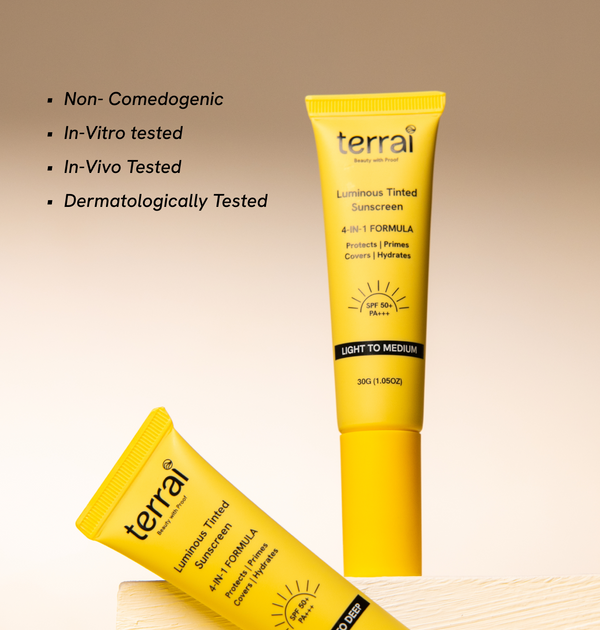
If you prefer coverage, the Luminous Tinted Sunscreen is a tinted sunscreen for face with SPF 50+ broad-spectrum protection and a choice of shades. Because it doubles as light coverage, reapplying it evens out tone rather than disturbing makeup.
All three are formulated and made in house by Terrai , with test reports and full ingredient details published on each product page.
Quick reapplication checklist
- Reapply roughly every 2 hours when outdoors or in direct sun
- Reapply immediately after swimming, towelling or heavy sweating
- Top up at least once on indoor days spent near windows
- Don’t rely on a higher SPF to stretch the window
- Don’t count SPF makeup as reapplication
- Keep a mist or tinted format handy for touch-ups over makeup
- Remember your lips, ears and the back of your neck
Final word
The 2-hour rule isn’t a myth, but the idea that sunscreen switches off at a set time is. Protection wears away through sweat, oil, water and touch, so how often you need to reapply sunscreen depends on what your day actually looks like. Apply generously in the morning, reapply when you’re outdoors or sweating, and choose formats that make touch-ups easy.
If you want a routine that covers morning protection and midday reapplication, explore the sun care collection and pick the formats that fit your day.
FAQs
Do you really need to reapply sunscreen every 2 hours?
When you’re outdoors or in direct sun, yes, reapplying roughly every 2 hours is a reliable default. Sweat, oil, water and touching your face gradually remove the protective film. On mostly indoor days away from windows it wears off more slowly, but one midday top-up is still a good habit.
Does SPF 50 last longer than SPF 30?
No. SPF measures how much UVB protection a sunscreen gives, not how long it stays on your skin. Both wear off through sweat, oil and friction at a similar rate. A higher SPF gives more protection while it’s on, but reapplication timing stays the same.
How do I reapply sunscreen over makeup ?
An SPF face mist is the easiest option, since it can be sprayed evenly without disturbing foundation. A tinted sunscreen also works, because it adds light coverage while protecting. Pressing a light fluid sunscreen on with a sponge, rather than rubbing, is another option.
Do I need to reapply sunscreen if I stay indoors?
Less often, but usually still once. UVA passes through window glass, so sitting near windows at home, at work or in a car still exposes your skin. If you’re far from windows all day, a strict 2-hour schedule matters less.
How long after swimming should I reapply sunscreen?
Reapply as soon as you’re out of the water and have patted dry, or once the stated water resistance time runs out, usually 40 or 80 minutes. Towelling removes a lot of product, so reapply after drying off even if the water resistance window hasn’t ended.
Shop the products
 Hydra Glow Mist
₹850.00
Shop now
 Aqua Radiance Sunscreen
₹899.00
Shop now
 Luminous Tinted Sunscreen
₹699.00
Shop now
Related collections

More from the Journal
 A brightening serum gets added to the routine, skin turns pink, flaky or reactive within days, and the assumption is usually that the active...
 Sunscreen goes on the face every morning, and lips get skipped entirely, even though they're just as exposed to UV throughout the day. That...
 A brightening serum goes on for two weeks, nothing visible happens, and it gets shelved as "not working" right around the point it was...