

Two-Tone Lips: Is It Genetic or Fixable?
The upper lip is noticeably darker than the lower one, or the outer edges are deeper in colour than the centre, and no lip balm or scrub seems to change it. Two-tone lips are one of the most common lip concerns people search for, and also one of the most misunderstood. Some two-tone lips are simply natural and won’t change with any product. Others are caused by everyday habits and exposure, and those often can improve. Knowing which one you’re dealing with saves time, money and a lot of frustration.
The short answer
Two-tone lips are often genetic, especially when the difference has been there for as long as you can remember. Natural variation in melanin between the upper and lower lip is normal, and no lip treatment will change that baseline.
But two-tone lips can also be acquired, or made more noticeable, by sun exposure, lip licking, smoking, irritation and dryness. That added darkening sits on top of your natural tone, and it’s the part a consistent lip pigmentation treatment, alongside daily sun protection, can realistically help with.
Why lips can be two different colours
Natural melanin differences
Lip colour comes from blood vessels showing through thin lip skin, combined with melanin, the pigment that gives skin its colour. The amount of melanin isn’t always evenly distributed. It’s common for the upper lip to carry more pigment than the lower lip, or for the outer border to be darker than the centre.
This kind of two-tone pattern is often seen in people with medium to deep skin tones and frequently runs in families. It’s a normal variation, not a skin condition, and it doesn’t indicate anything wrong with lip health.
The upper lip gets more sun
The upper lip angles slightly upward and catches more direct sunlight than the lower lip, which sits partly in shadow. Lips also have less natural melanin defence than surrounding facial skin, so repeated UV exposure can deepen colour on the upper lip over time. Our guide on why sun exposure is a leading cause of dark lips explains this in more detail.
Habits that darken one area more
Several everyday habits affect one part of the lips more than another:
- Lip licking, which often targets the lower lip or corners, causing dryness and irritation
- Lip biting or picking, which can cause inflammation that leaves pigmentation behind
- Smoking, where heat and chemical exposure can darken the lips, often unevenly
- Reactions to lip products or toothpaste, which can irritate the lip border
- Chronic dryness and cracking, since repeated inflammation on thin lip skin can trigger pigmentation
Our guide on the real causes of lip pigmentation covers each of these in depth.
How to tell if your two-tone lips are genetic or acquired
There’s no single test, but these questions help:
- Has it always been this way? If your lips have looked two-toned since childhood, it’s most likely natural.
- Do family members have the same pattern? A shared pattern suggests genetics.
- Has it changed recently? Gradual darkening over months or years points to an acquired cause.
- Is the darker area also dry, rough or flaky? Texture changes often go along with acquired pigmentation.
- Does the pattern match a habit? Darker corners with lip licking, or a darker upper lip with lots of sun exposure, suggest a trigger you can address.
Many people have a mix of both: a natural two-tone baseline with some extra darkening layered on top. That’s worth knowing, because it means some improvement is possible even if the lips never become one even colour.
What can and can’t change
What a lip treatment can realistically help with
- Darkening caused by sun exposure, dryness, irritation or habits, once the trigger is reduced
- Dullness and uneven tone across the lip surface
- Dryness, flakiness and rough texture, which can make pigmentation look more pronounced
What won’t change
- Your natural, genetic lip colour
- A two-tone pattern you’ve had since childhood, beyond any extra darkening on top of it
Being clear about this upfront matters. A lip pigmentation treatment works by slowing new melanin production and letting skin turnover clear excess pigment. It can’t reprogram the baseline amount of melanin your lips naturally carry.
When to see a doctor
Most two-tone lips are harmless, but see a doctor or dermatologist if:
- A dark patch appears suddenly or spreads quickly
- Only one small area is affected and it has changed shape, size or texture
- The darkening comes with pain, swelling, bleeding or other symptoms
- You notice dark patches elsewhere in your mouth or body alongside fatigue or other changes
These aren’t situations to wait out with a lip product.
Common mistakes with two-tone lips
- Scrubbing to even out colour. Lip skin is thin, and scrubbing causes inflammation, which can create more pigmentation. Our guide on why the lip barrier is thinner than you think explains why lips react this way.
- Using DIY remedies like lemon juice. Acidic home remedies can irritate lips and make darkening worse.
- Expecting a balm to change pigmentation. Most lip balms moisturise rather than target melanin. Read lip serum vs lip balm to see the difference.
- Skipping lip sun protection. The upper lip catches more sun, so unprotected exposure keeps adding to the darker area.
- Comparing against an ideal rather than your own baseline. Progress should be measured against how your lips looked before, not against a perfectly even colour.
A realistic routine for two-tone lips
- Stop the triggers. Reduce lip licking, biting and picking, and avoid products that irritate your lips.
- Treat consistently. Use a lip treatment targeting pigmentation twice daily, without gaps.
- Protect during the day. Shield your lips from UV, especially the upper lip.
- Keep lips hydrated. Hydrated lips look smoother and more even, and a healthy barrier is less prone to irritation.
- Track progress properly. Take a photo in natural daylight on day one, then compare at four weeks against that first photo, not against last week.
Where Lip Ritual fits, honestly
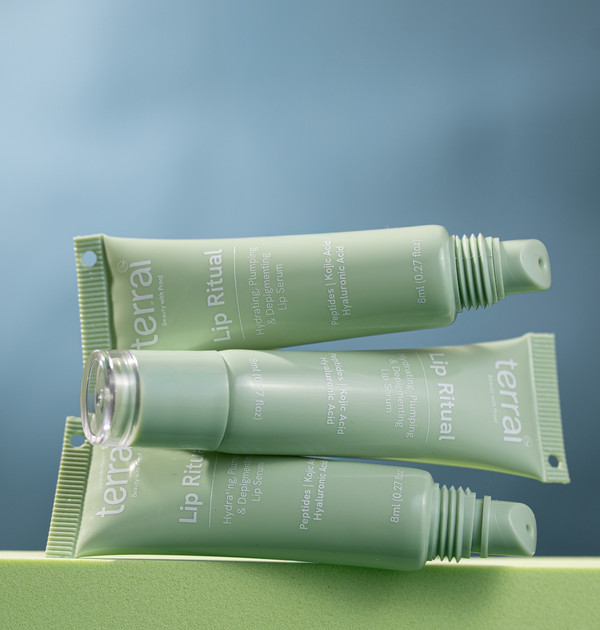
Lip Ritual is a hydrating lip serum in a high-shine gloss format, designed to target lip pigmentation, dullness and dryness. The formula combines kojic acid, vitamin C, licorice leaf extract, green tea extract and a palmitoyl tripeptide for tone, with hyaluronic acid, olive squalane, jojoba oil and saffron oil for hydration and barrier support.
It’s in-vivo tested for lip pigmentation and hydration. In a 28-day, dermatologist-supervised study with twice-daily use, melanin index fell 14.9% at day 14 and 27.9% at day 28. The full report is published on the product page, and our guide on how long it takes to fix dark, pigmented lips explains the results and their limits.
For two-tone lips specifically, here’s the honest picture. Lip Ritual can help reduce acquired darkening and improve overall tone, texture and hydration. It won’t change a natural, genetic two-tone pattern, and the study wasn’t designed around two-tone lips specifically. If your darker area has deepened over time because of sun, dryness or habits, that added pigmentation is what consistent use is aimed at.
Lip Ritual doesn’t contain SPF, so pair it with daytime protection from the Terrai sun care collection to stop UV from undoing your progress. All products are formulated and made in house by Terrai .
Final word
Two-tone lips are often genetic, and that natural pattern is normal and permanent. What can change is any extra darkening caused by sun, dryness, irritation and habits. Removing triggers, protecting your lips from UV and using a lip pigmentation treatment consistently is the realistic route to more even-looking lips, measured against your own baseline.
If acquired darkening is part of your two-tone pattern, take a look at Lip Ritual and read the published study before deciding.
FAQs
Why is my upper lip darker than my lower lip?
It’s often natural. Many people have more melanin in the upper lip, especially those with medium to deep skin tones. The upper lip also catches more direct sun than the lower lip, so UV exposure can deepen the difference over time.
Are two-tone lips genetic?
Often, yes. If your lips have looked two-toned since childhood or family members share the same pattern, it’s most likely genetic. Some people also have acquired darkening from sun, dryness or habits layered on top of their natural tone.
Can two-tone lips be fixed?
Acquired darkening can often improve with consistent lip pigmentation treatment, daily sun protection and removing triggers like lip licking or smoking. A natural, genetic two-tone pattern won’t change, since no product alters your baseline lip colour.
How long does it take to see results on two-tone lips?
Hydration and texture can improve within days, while tone changes take weeks of consistent twice-daily use. Progress depends on how much of the darkening is acquired rather than genetic, and on keeping lips protected from the sun.
Should I see a doctor about two-tone lips?
See a doctor if a dark patch appears suddenly, spreads, changes shape or texture, or comes with pain, bleeding or other symptoms. Long-standing, even two-tone colouring is usually a normal variation and not a cause for concern.

More from the Journal
 The alarm went off late, there are ten minutes to get out the door, and a seven-step skincare routine isn’t happening. On mornings like...
 You slept eight hours, drank your water, and still woke up with puffy eyes and skin that looks tired, dull and slightly irritated. The...
 Almost every lip balm, lip serum and lip treatment on the shelf promises softer, smoother or lighter lips. Very few show you how they...