

Under-Eye Puffiness and Stress Skin: Is It Really About Sleep?
You slept eight hours, drank your water, and still woke up with puffy eyes and skin that looks tired, dull and slightly irritated. The usual advice is “get more sleep”, and while sleep matters, it’s rarely the whole story. Under-eye puffiness and stressed-looking skin are shaped by fluid balance, inflammation, your skin barrier, genetics and daily habits. Understanding which of these is behind your puffiness makes it much easier to know what will actually help.
The short answer
Sleep is one factor, but not the only one. Under-eye puffiness usually comes from fluid collecting in the thin tissue around the eyes, which can be triggered by salty food, alcohol, allergies, rubbing your eyes, crying, sleeping position and natural ageing. Stressed-looking skin, meanwhile, is often linked to a weakened skin barrier, dehydration and low-level inflammation.
Lifestyle changes tackle the causes. Skincare can help with the visible signs: ingredients like caffeine can temporarily reduce the look of puffiness, while barrier-supporting and calming ingredients help skin look less dull, red and reactive over time.
Why the under-eye area puffs up so easily
The skin there is unusually thin
The skin under your eyes is some of the thinnest on the body, with very little supportive tissue underneath. That makes it one of the first places where fluid shows up. Even a small amount of fluid retention looks obvious here, while it would go unnoticed on cheeks or forehead.
Fluid shifts overnight
When you lie flat for hours, fluid can pool in the soft tissue around the eyes. That’s why puffiness is often worst first thing in the morning and improves as you move around. Sleeping with your head slightly raised can reduce this for some people.
Diet and alcohol play a bigger role than people expect
Salty meals encourage the body to hold onto water, and alcohol can disrupt fluid balance and sleep quality. A salty dinner or a late night out often shows up under the eyes the next morning, regardless of how many hours you slept.
Allergies and eye rubbing
Allergies cause inflammation and fluid build-up around the eyes, and they often make you rub your eyes, which irritates the thin skin further. Persistent morning puffiness with itching or watery eyes is worth looking at from an allergy angle.
Genetics and ageing
Some people naturally have more prominent under-eye fat pads, which can look like puffiness no matter how well they sleep. With age, the tissues that hold these fat pads in place weaken, and skin loses some firmness, so bags can become more noticeable over time. Skincare can improve how the skin looks, but it won’t change this underlying structure.
What “stress skin” actually looks like
“Stress skin” isn’t a medical diagnosis, but it describes something many people recognise: during demanding periods, skin looks duller, feels drier or more reactive, and breaks out more easily.
Common signs include:
- Dullness and uneven tone, often with a tired, flat look
- Redness or sensitivity, where products that normally feel fine start to sting
- Dehydration and tightness, even if skin also looks oily
- More breakouts, followed by marks that take longer to fade
- Puffiness, especially when stress comes with poor sleep, late meals or more caffeine and alcohol
Stress is closely tied to the habits that affect skin: shorter or poorer sleep, irregular meals, skipped skincare and more time on screens. It’s also linked to inflammation and a weaker skin barrier, which is why stressed skin often feels both dehydrated and reactive. Our guide on barrier-first skincare explains why a compromised barrier makes everything else harder.
Is it really about sleep?
Sleep matters in two ways. Poor or short sleep can make puffiness and dark circles more visible, and consistent sleep supports the skin’s overnight repair. But you can sleep well and still wake up puffy because of salt, alcohol, allergies, sleeping flat or genetics. And you can be short on sleep without much puffiness if those other factors aren’t present.
So the honest answer: sleep is part of the picture, but treating puffiness and stress skin works best when you look at all the causes together.
What actually helps with under-eye puffiness
Habits that tackle the cause
- Raise your head slightly while sleeping to reduce fluid pooling
- Watch salt and alcohol, especially in the evening
- Avoid rubbing your eyes, and address allergies if they’re a trigger
- Keep a regular sleep schedule, not just a long one
- Stay hydrated through the day, since dehydration can make the body hold onto fluid
Quick morning fixes
- A cool compress for a few minutes can constrict blood vessels and reduce swelling
- Gentle tapping with your ring finger around the orbital bone (not on the eyelid) can help move fluid
- Applying skincare with a light touch, patting rather than rubbing
Skincare ingredients that can help
- Caffeine: can temporarily constrict blood vessels and reduce the look of puffiness
- Green tea extract: an antioxidant with calming properties
- Peptides: support firmness and smoother-looking texture over time
- Hyaluronic acid: hydrates thin, dehydrated skin so it looks plumper and less crepey
- Niacinamide: supports the skin barrier and helps even out tone and redness
These ingredients help with how skin looks. They don’t replace sleep, a balanced diet or medical treatment for underlying conditions.
Don’t forget sun protection
UV exposure breaks down collagen and contributes to thinning skin and dark circles around the eyes over time. Because the under-eye area is so thin, it shows sun damage early. Daily sunscreen, applied carefully up to the orbital bone, is one of the most effective long-term steps for the eye area. A lightweight, water-based formula like the Aqua Radiance Sunscreen is easier to wear close to the eyes than a heavy cream. You can browse the full sun care collection for other formats.
Common mistakes
- Blaming sleep alone. If puffiness continues despite good sleep, look at salt, alcohol, allergies and sleeping position.
- Rubbing tired eyes. Friction irritates the thin skin and can make puffiness and darkening worse.
- Using harsh products during stressful periods. Stressed skin is often more reactive, so strong exfoliants can backfire.
- Expecting skincare to remove genetic bags. Ingredients can improve the look of skin, not change underlying structure.
- Skipping sunscreen around the eyes. UV damage shows up early in thin under-eye skin.
- Stopping your routine when life gets busy. Consistency matters most during stressful periods. A short routine is better than none.
When to see a doctor
See a doctor if puffiness is persistent and doesn’t improve during the day, affects only one eye, comes with redness, pain, itching or vision changes, or appears alongside swelling elsewhere in the body. These can point to allergies, infections or other health issues that need proper diagnosis.
How One & Done fits into a routine for puffiness and stress skin
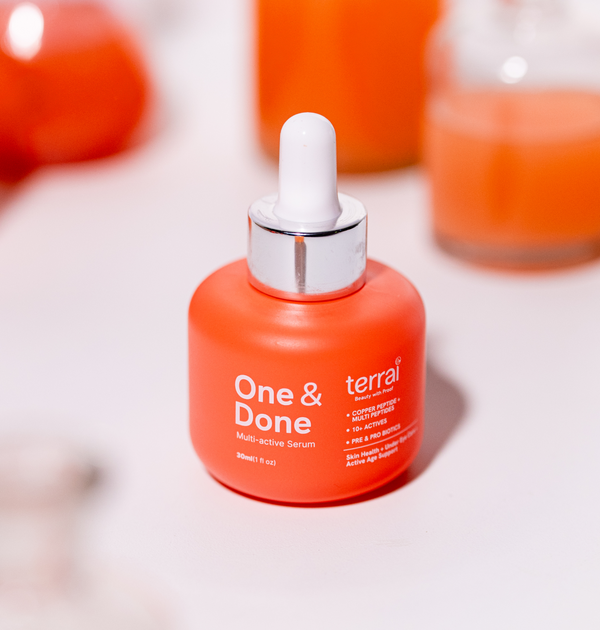
The One & Done Serum is a multi-corrective face serum formulated to address several concerns linked to stressed skin, including under-eye puffiness, redness, irritation, dehydration, dullness and early signs of ageing caused by stress, pollution and UV.
Its formula includes caffeine and green tea extract, ingredients commonly used to reduce the look of puffiness and calm the skin, along with niacinamide for barrier support and tone. Sodium hyaluronate and olive squalane add hydration, while a peptide complex, including acetyl hexapeptide-8, copper tripeptide-1 and palmitoyl pentapeptide-4, supports firmer, smoother-looking skin over time. Tranexamic acid and a vitamin C derivative also work on dark spots and uneven tone.
Because it combines hydration, calming and correcting ingredients in one step, it suits stressful periods when a long routine isn’t realistic. Our guide on multi-corrective serums explained covers how a single serum can handle several concerns, and peptides and tranexamic acid explains how its anti-ageing and brightening actives work together.
Use 2 to 3 drops on the face and neck morning and evening, as directed on the product page, keeping it out of the eyes, and always follow with sunscreen in the morning. In-vivo clinical, hypoallergenic and skin irritation test reports are published on the product page. For tone and texture changes, give it several weeks of daily use. Our guide on how long brightening serum results take sets realistic expectations.
If breakouts and marks are part of your stress skin, our guide on post-acne marks, dullness and uneven tone helps you work out which concern you’re actually treating. You can also explore the full skin care collection from Terrai .
Quick checklist for puffy eyes and stressed skin
- Sleep with your head slightly raised
- Cut back on salt and alcohol in the evening
- Avoid rubbing your eyes
- Use a cool compress on puffy mornings
- Choose a calming, hydrating serum with ingredients like caffeine and niacinamide
- Wear sunscreen daily, up to the orbital bone
- Keep your routine short and consistent during stressful periods
Final word
Under-eye puffiness and stress skin are rarely just about sleep. Fluid balance, diet, allergies, genetics, barrier health and UV all play a part. Fix the habits you can, protect your skin daily, and use a calming, hydrating serum to help your skin look fresher while the bigger changes take effect.
If you want one step that covers puffiness, hydration and tone together, take a look at the One & Done Serum .
FAQs
Why do I have puffy eyes even after sleeping well?
Puffiness often comes from fluid collecting in the thin under-eye tissue, which can be triggered by salty food, alcohol, allergies, sleeping flat or eye rubbing. Genetics also play a role, since some people naturally have more prominent under-eye fat pads regardless of sleep.
Can stress affect your skin?
Yes. Stress is linked to inflammation, a weaker skin barrier and habits like poor sleep and irregular meals. This can show up as dullness, dryness, redness, sensitivity and more frequent breakouts, along with puffiness when sleep and diet are disrupted.
Does caffeine in skincare reduce puffiness?
Caffeine can temporarily reduce the look of puffiness by constricting blood vessels and helping the skin look tighter. The effect is cosmetic and temporary, so it works best alongside habits that address the cause, such as reducing salt and sleeping with your head raised.
Can a face serum fix under-eye bags?
A serum can improve how the skin looks by hydrating, calming and reducing the look of puffiness. It can’t change structural under-eye bags caused by genetics or age-related changes in fat pads and supporting tissue.
When should I worry about puffy eyes?
See a doctor if puffiness is persistent and doesn’t ease during the day, affects only one eye, or comes with pain, redness, itching, vision changes or swelling elsewhere in the body. These can signal allergies, infection or other health concerns.

More from the Journal
 Almost every lip balm, lip serum and lip treatment on the shelf promises softer, smoother or lighter lips. Very few show you how they...
 The forehead and nose are shining by midday, while the cheeks feel tight and look slightly flaky under the same sunscreen. That’s the everyday...
 Sunscreen goes on at 8 am, and by lunch nobody has touched it again. Some people are certain it’s still working. Others think it...