

In-Vivo Tested: What That Actually Means (and Why Many Lip Products Skip It)
Almost every lip balm, lip serum and lip treatment on the shelf promises softer, smoother or lighter lips. Very few show you how they know. “Clinically tested” and “dermatologically tested” appear on packs all the time, but those phrases can describe very different things, and many lip care products don’t publish any test results at all. Understanding what in-vivo testing means helps you tell the difference between a claim that was measured and one that was simply written.
The short answer
In-vivo testing means a product was tested on real people, on living skin, rather than only in a lab dish or on synthetic models. For a lip product, a proper in-vivo study measures changes like hydration and pigmentation on participants’ lips over a set period, using instruments rather than opinion alone.
It’s one of the most meaningful forms of evidence a lip treatment can offer, because it shows how the formula performs in the conditions you’ll actually use it in. It’s also more time-consuming and costly to run than a simple safety check, which is one reason it’s less common in lip care.
In-vivo vs in-vitro: what the terms mean
In-vitro: tested outside the body
“In vitro” is Latin for “in glass”. In-vitro tests happen in a lab, on cell cultures, skin models or chemical setups. They’re useful for early formulation work, such as checking whether an ingredient can inhibit an enzyme involved in pigmentation, or how stable a formula is.
What in-vitro tests can’t tell you is how a finished product behaves on real lips, which are affected by saliva, eating, drinking, talking and constant movement.
In-vivo: tested on living people
“In vivo” means “within the living”. In-vivo testing applies the finished product to human volunteers under controlled conditions and measures what happens. For lips, that typically includes:
- Hydration, measured with an instrument that reads moisture levels in the skin
- Pigmentation, measured with a device that reads melanin levels rather than relying on how lips look in a photo
- Texture, dryness and cracks, assessed by trained evaluators or imaging
- Tolerance, tracking any irritation, redness or itching during the study
Where patch tests and “dermatologically tested” fit in
A patch test or dermatological test usually checks whether a product is likely to cause irritation. That’s important, but it’s a safety check, not a performance test. A product can be “dermatologically tested” without any evidence that it hydrates, lightens dark lips or improves texture.
In-vivo efficacy testing answers a different question: does the product actually do what it says?
Why lip testing matters more than you’d think
Lips aren’t just smaller areas of facial skin. They have a much thinner outer layer, little to no oil gland activity and less natural melanin protection, which is why they dry out and darken faster than the rest of the face. Our guide on why the lip barrier is thinner than you think explains this in detail.
That structural difference means results from facial skin studies don’t automatically carry over to lips. A brightening ingredient that performs well on cheeks may behave differently on lip tissue. The only way to know how a lip pigmentation treatment works on lips is to measure it on lips.
Why many lip products skip it
There are a few practical reasons in-vivo testing is less common in lip care:
- Cost and time. A proper study needs volunteers, supervision, instruments and several weeks of consistent use.
- Lip products are often treated as cosmetic. Many lip balms are positioned as simple moisturisers, where efficacy data isn’t expected.
- Results have to be published honestly. A study can show modest results as easily as impressive ones, and publishing it means standing behind whatever it found.
None of this means an untested product doesn’t work. It means you’re taking the claim on trust rather than evidence.
How to read a lip product’s clinical report
If a brand publishes a report, here’s what to check:
- Who was tested and how many. The number of participants and their age range tell you how broadly the results apply.
- How long the study ran. Hydration can change within minutes, but pigmentation needs weeks. A short study can’t support a long-term claim.
- What was measured, and with what. Instrument readings (such as melanin index or skin moisture) are stronger evidence than questionnaires alone.
- How often the product was used. Results depend on the application routine. If the study used it twice daily, using it once a day may change your timeline.
- Supervision. A dermatologist-supervised study adds credibility.
- Limitations. Look for honesty about what the study didn’t do, such as having no placebo group.
- Safety outcomes. Check whether any irritation, redness or adverse reactions were recorded.
Common mistakes when judging lip product claims
- Treating “dermatologically tested” as proof of results. It usually means tolerance was checked, not that the product works.
- Trusting before-and-after photos alone. Lighting, angle and lip position can change how lips look dramatically.
- Ignoring the timeline. A study’s results reflect its exact duration and routine.
- Expecting genetic lip colour to change. No lip treatment changes your natural baseline tone. Our guide on the real causes of lip pigmentation explains which darkening is treatable.
- Assuming a balm treats pigmentation. Most balms are designed to moisturise, not to target melanin. Read lip serum vs lip balm to see how they differ.
How Lip Ritual was tested
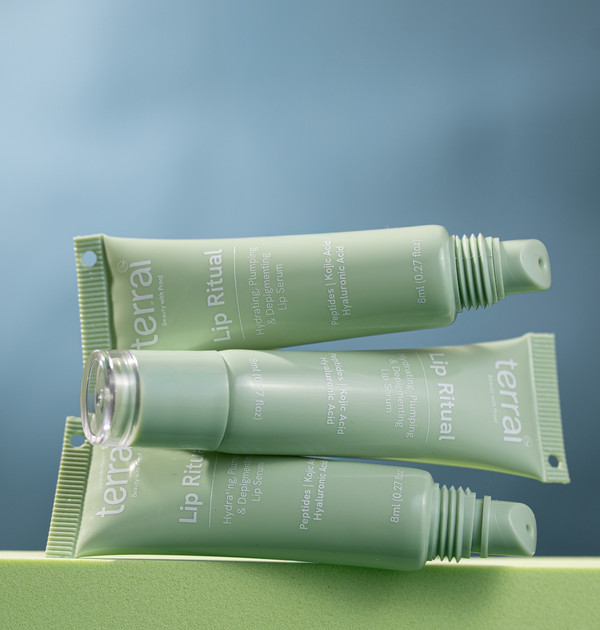
Lip Ritual is a hydrating lip serum in a high-shine gloss format, and it’s in-vivo tested for both lip pigmentation and hydration. The full In-Vivo Study report is published on the product page for anyone to read.
The 28-day, dermatologist-supervised study involved 33 participants using the product twice daily. Key measured results:
- Hydration: lip moisture rose 18% at 30 minutes and 33% at two hours after application
- Pigmentation: melanin index, measured by Mexameter, fell 14.9% at day 14 and 27.9% at day 28
- Texture: lip dryness fell 49.3% and smoothness rose 81.0% by day 28
- Tolerance: no adverse events, and zero cases of irritation, itching or redness recorded
The study also has limitations worth knowing. It was single-arm with no placebo group, participants averaged around 26 years old and were selected for normal to dry lips, and they were asked to avoid prolonged sun exposure during the study. Our guide on how long it takes to fix dark, pigmented lips walks through the full results and what they do and don’t show.
Alongside the efficacy study, Terrai publishes separate reports for non-toxic testing , cruelty-free status and vegan status .
The formula combines kojic acid, vitamin C, licorice leaf extract, green tea extract and a palmitoyl tripeptide for tone, with hyaluronic acid, olive squalane, jojoba oil and saffron oil for lip hydration and barrier support. It’s formulated and made in house by Terrai , which is part of what makes publishing these reports possible.
One practical note: Lip Ritual doesn’t contain SPF, and sun exposure is a major driver of dark lips. Our guide on protecting your lips from UV covers why daytime protection matters alongside any lip treatment.
Quick checklist before buying a lip treatment
- Is the product in-vivo tested, not just dermatologically tested?
- Is the full report published, not just a percentage on the pack?
- Were results measured with instruments?
- Does the study duration match the claim?
- Are limitations and safety outcomes stated?
- Does the routine used in the study match how you’ll use it?
Final word
In-vivo testing is the closest thing to proof that a lip product does what it claims on real lips. It doesn’t guarantee identical results for everyone, but it replaces marketing language with measured outcomes you can read for yourself. When a brand publishes its full report, including its limitations, that transparency is itself a useful signal.
If you want a lip treatment backed by published in-vivo results, read the reports on the Lip Ritual page and decide for yourself.
FAQs
What does in-vivo tested mean on a lip product?
In-vivo tested means the finished product was tested on real people rather than only in a lab. For lip products, this usually involves measuring changes in hydration, pigmentation, texture and tolerance on volunteers’ lips over a set period, using instruments to record results.
Is in-vivo testing better than in-vitro testing?
They answer different questions. In-vitro testing shows how ingredients behave in a lab setting, while in-vivo testing shows how the finished product performs on living skin. For judging whether a lip treatment actually works on lips, in-vivo results are more directly relevant.
Does dermatologically tested mean a lip balm works?
Not necessarily. Dermatologically tested usually means the product was checked for irritation or tolerance on skin. It’s a safety check rather than evidence of results like hydration or reduced pigmentation, which need a separate efficacy study.
How can I check if a lip product’s claims are real?
Look for a published clinical report rather than claims on the pack alone. Check the number of participants, study length, how often the product was used, what instruments measured the results, and whether limitations and safety outcomes are stated.
Can in-vivo tested lip serums lighten dark lips?
They can reduce pigmentation caused by factors like sun exposure, dryness or lip licking, when used consistently and with daily sun protection. Results vary by person and cause, and no product changes your natural genetic lip colour.

More from the Journal
 The forehead and nose are shining by midday, while the cheeks feel tight and look slightly flaky under the same sunscreen. That’s the everyday...
 Sunscreen goes on at 8 am, and by lunch nobody has touched it again. Some people are certain it’s still working. Others think it...
 A brightening serum gets added to the routine, skin turns pink, flaky or reactive within days, and the assumption is usually that the active...